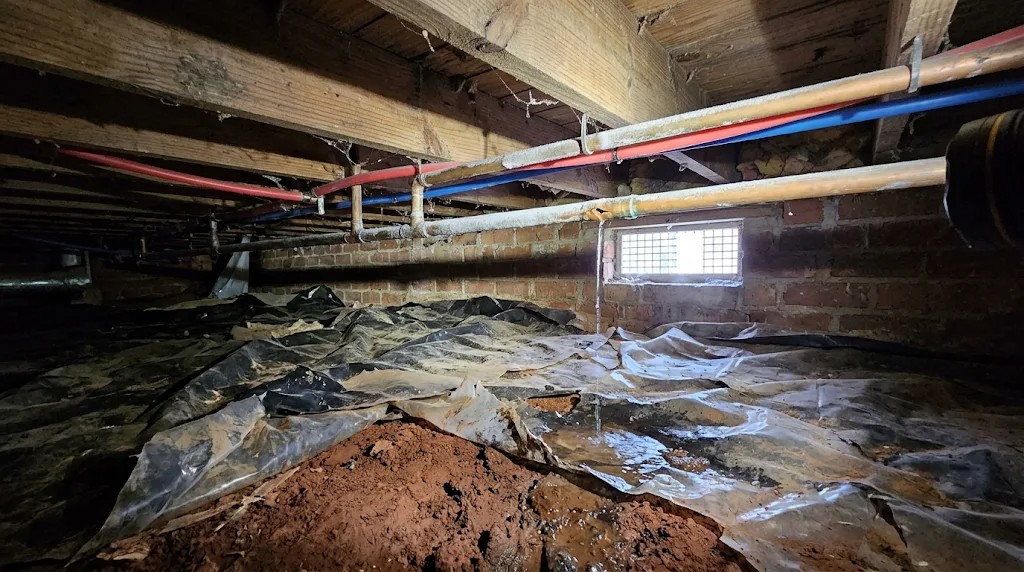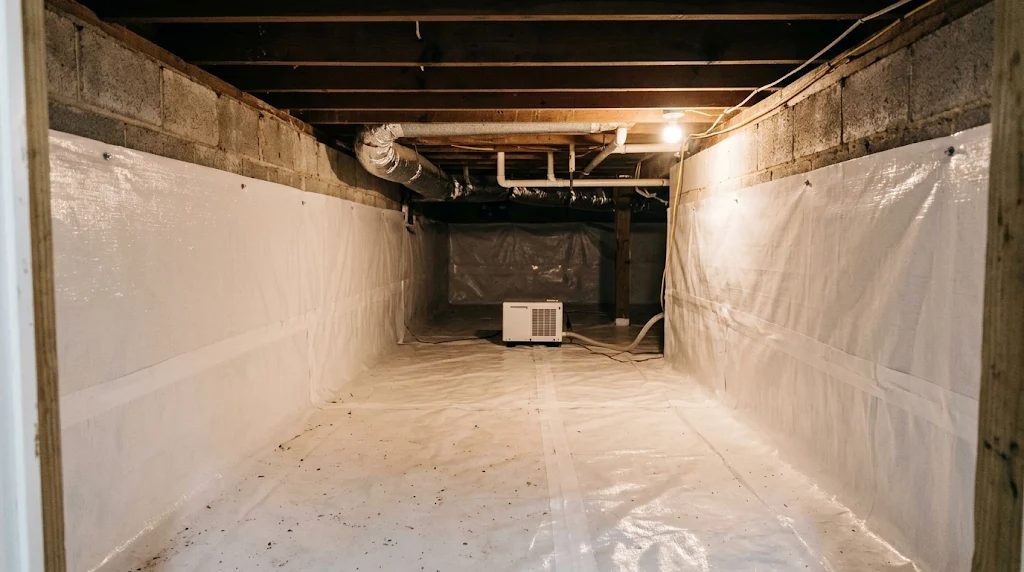
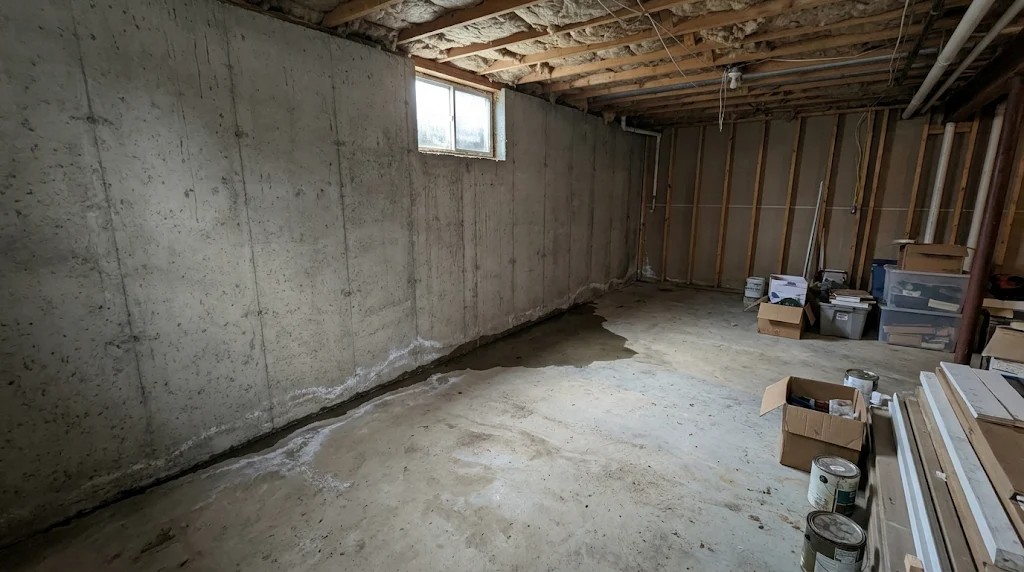
If you have a basement leaking where the wall meets the floor, you are looking at the most common entry point for water in a Georgia basement. The thin line of water along the base of the wall usually shows up a few hours or a day after a heavy rain, follows the perimeter, and dries out before anyone can find the source. Most homeowners reach for a tube of caulk. That rarely works for long, and the reason has to do with how the basement was built.
Here is why water collects at that joint, how to tell what kind of water you are dealing with, and which fixes actually stop it.
Why Water Finds the Joint Between the Wall and the Floor
A basement is not poured in one piece. The footing goes in first, then the walls, and the floor slab is poured last, inside the walls. Because the concrete is placed at different times, the slab never bonds to the wall. The seam where they meet is a cold joint, and even when it looks tight, there is a hairline gap running around the whole basement. Contractors often call it the cove joint.
That gap sits right on top of the footing, which is the lowest point of the foundation and the place where groundwater collects. The University of Minnesota Extension describes the classic sign of this: a ring of dampness at the base of the walls, and it notes that capillary suction is very common at cold joints.
Hydrostatic Pressure: When the Soil Can’t Hold More Water
After a long or heavy rain, the soil around the foundation fills up. When it can’t drain fast enough, the water level in the ground rises around the footing and starts pushing against the walls and up under the slab. That push is hydrostatic pressure, and water under pressure takes the easiest way in. In a basement, that is almost always the cold joint at the base of the wall.
This is why the timing confuses people. The leak often appears after the rain stops, because it takes time for the ground to saturate and for the water level to rise to the bottom of the slab.
Georgia’s soils make it worse. The same UMN Extension guide lists how high water can wick up through different soils: a few inches in gravel, up to 8 feet in sand, and 12 to 20 feet in clay. The red clay around most metro Atlanta homes also drains slowly, so it stays wet long after a storm. We looked at what Georgia’s clay actually does to foundations in is your Georgia foundation really on expansive clay?
Is It Really a Leak? Three Things It Could Be
Water at the base of the wall can come from three different places, and each one has a different fix:
- Groundwater under pressure. Water appears after rain, runs along the joint, and may spread across the floor. This is the hydrostatic problem above.
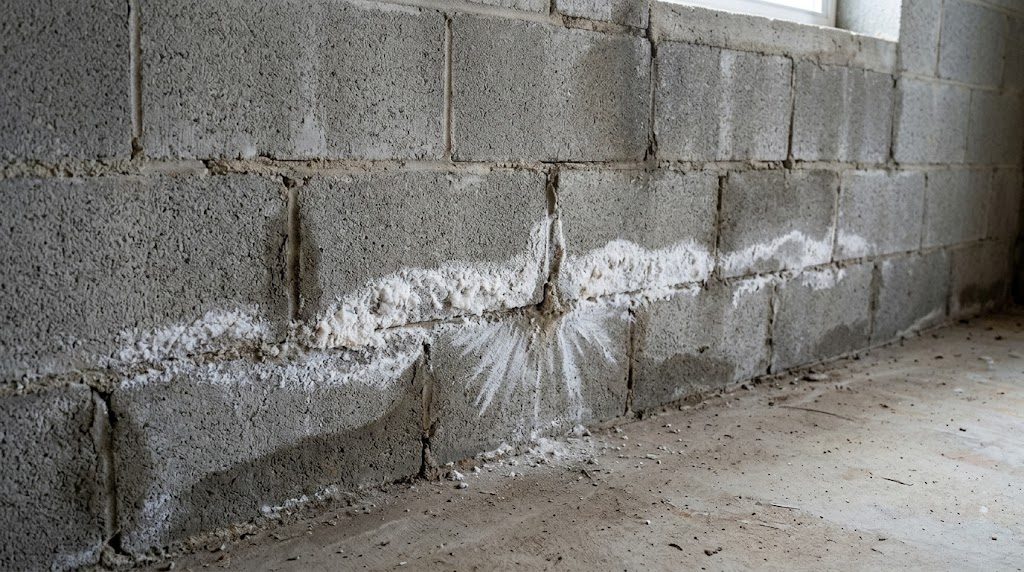
- Capillary moisture. The joint and the bottom of the wall stay damp or show white crusty deposits, without puddles. That powder is usually efflorescence, the salts left behind as water moves through the concrete. See white powder on basement walls: efflorescence or mold?
- Condensation. The wall sweats on humid days, especially in summer, and the water runs down and pools at the joint. No rain needed. We explained how to spot it in condensation on basement walls in the morning.
If water also comes up through cracks in the middle of the slab, the cause is the same groundwater pressure acting on a larger area. That case is covered in why water comes up through your floor after rain.
Why Sealing the Joint From Inside Usually Fails
Caulk, hydraulic cement and waterproof paint all try to block the water at the last possible point. The UMN Extension guide is direct about interior coatings and membranes: they generally won’t solve the problem in the long term. The water is still there, and these products either break down under pressure or push the water to the next weak spot, often a crack a few feet away.
Foundation guidance says the same about coatings on the outside of the wall. The Oak Ridge National Laboratory Foundation Handbook notes that a dampproof coating is not effective against water under hydrostatic pressure, and an International Code Council TechNote on groundwater makes the same point. Where hydrostatic pressure exists, the International Residential Code calls for waterproofing and drainage, not just a coating.
Sealing the joint still has a role. Building scientist Joseph Lstiburek of Building Science Corporation recommends sealing the slab to the wall in BSI-110: Keeping the Water Out of Basements. But in his approach the sealant is one part of a system where drains under and around the slab carry the water away first. A sealant on its own, with nothing relieving the pressure, is a temporary patch.
How to Fix a Basement Leaking Where the Wall Meets the Floor
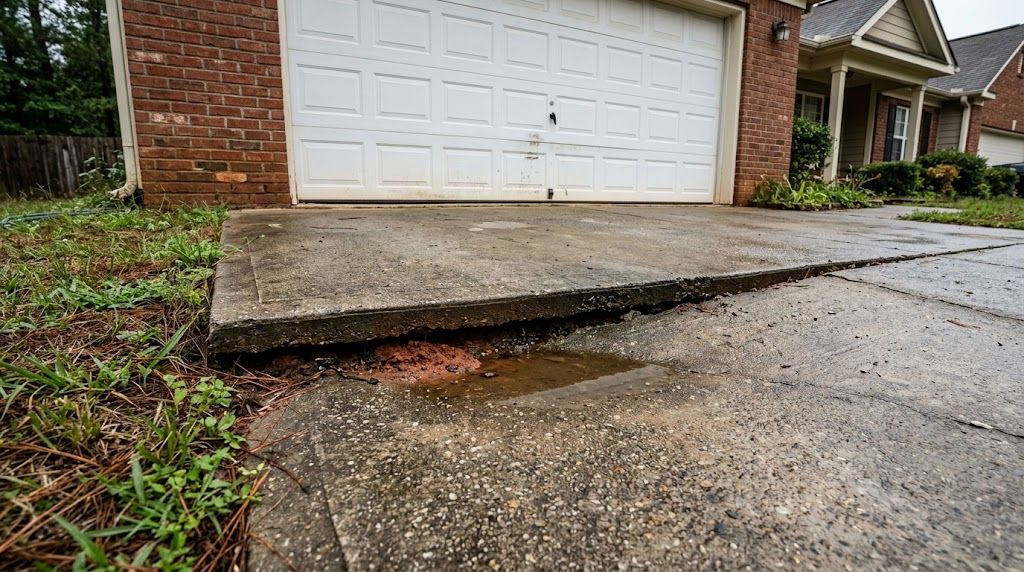
1. Get roof and surface water away from the wall. Most groundwater at the footing starts as rain that landed next to the house. UMN Extension recommends grading the soil to slope away at least 1 inch per foot for 6 feet, and downspout extensions that discharge at least 4 feet from the wall. The ICC TechNote recommends at least 5 feet. Start with sizing your gutters and downspouts and, if the yard holds water, a French drain, regrading or a dry well.
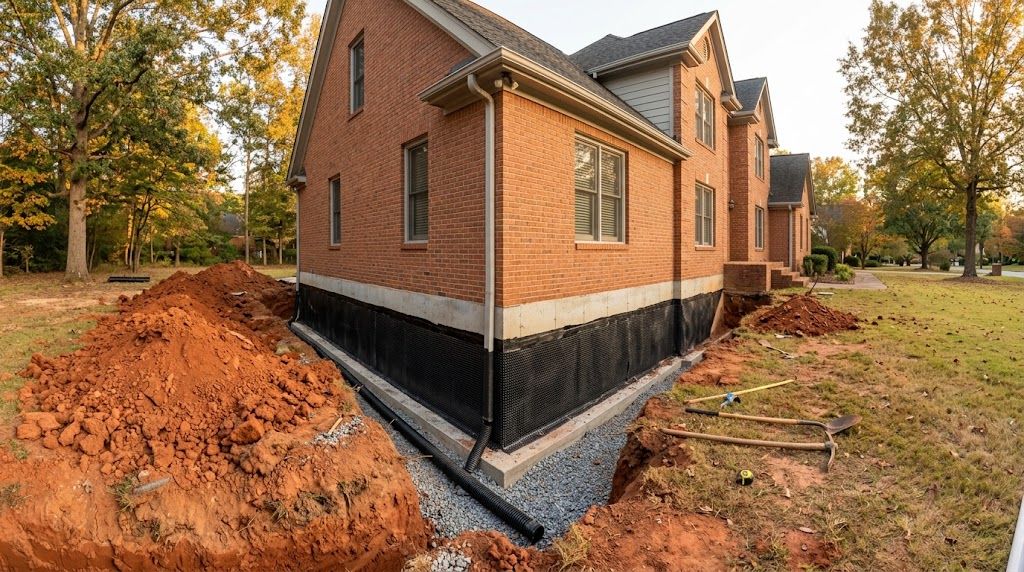
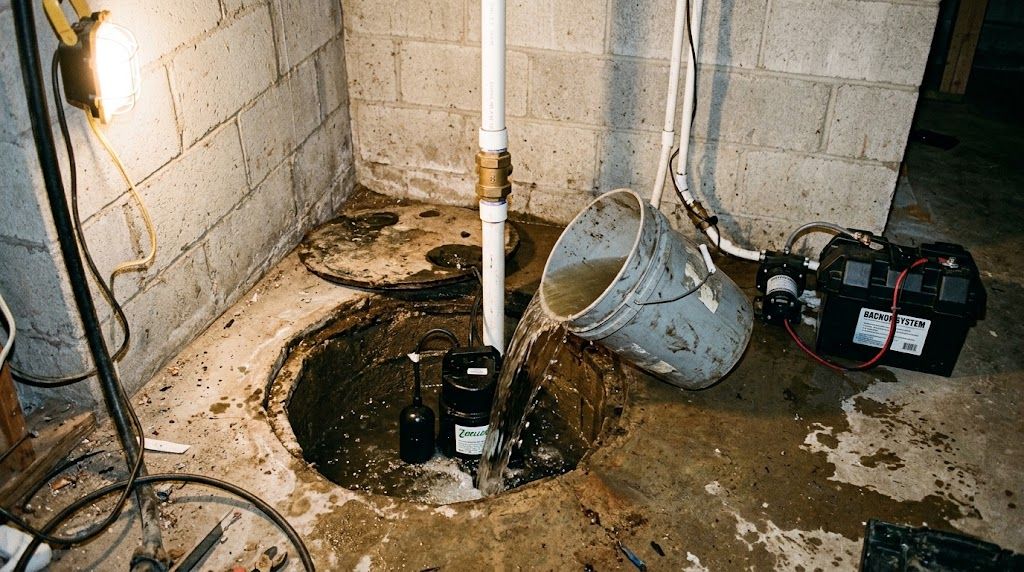
2. Relieve the pressure at the footing. If the joint still leaks once surface water is under control, the water table around the footing has to be drained. That means a perimeter drain at footing level that carries water to a sump pit, where a pump sends it out of the house. Lstiburek describes an interior perimeter drain with a sump as the retrofit for existing leaking basements, and UMN Extension rates a drain placed inside the footing perimeter as the most effective interior system. Because the drain sits below the cold joint, water is captured before it ever reaches the gap.
3. Exterior waterproofing when the walls themselves leak. Excavating to waterproof the outside of the wall and install a footing drain is more invasive and more expensive, but it stops water before it touches the concrete. We compared both approaches in interior vs. exterior basement waterproofing.
4. Keep the pump working. An interior drain is only as good as the sump pump behind it. Building Science Corporation recommends a battery backup and an airtight lid on the pit. Here is how to test your sump pump and battery backup.
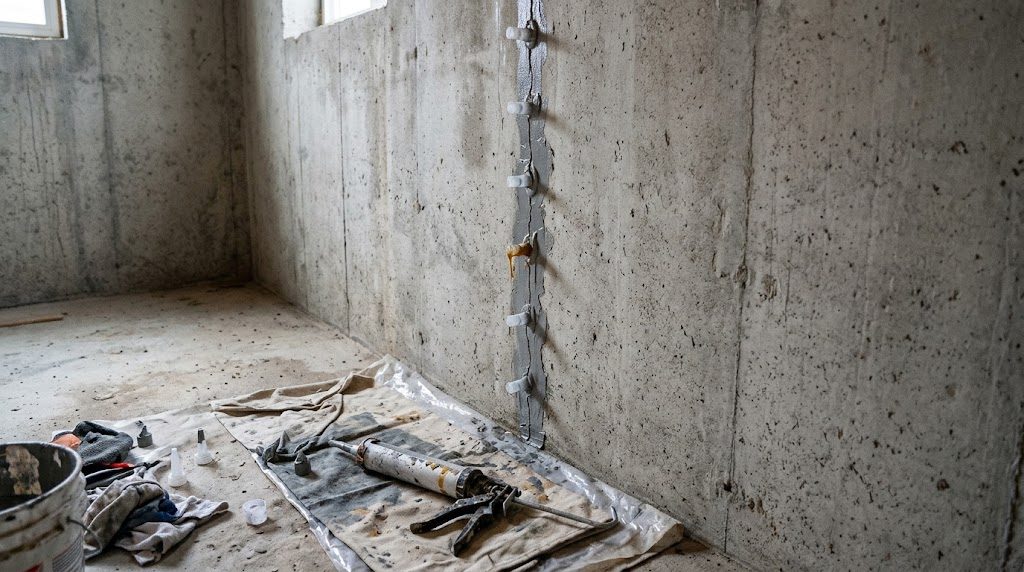
Wall cracks that leak on their own are a separate repair. If water also comes through a vertical crack, epoxy or polyurethane injection may be part of the fix.
Don’t Wait Until the Basement Is Finished
A small seep at the cove joint is easy to ignore in an unfinished basement. Once there is carpet, drywall and furniture against those walls, the same seep soaks the bottom of the drywall and the carpet pad, and mold can start if the materials stay wet. The EPA guidance we summarized in mold in your Georgia basement is to dry wet materials within 24 to 48 hours. Fix the water first, then finish the space.
Get the Joint Inspected
CGS Waterproofing & Foundations installs drainage systems, interior perimeter drains and sump pumps, and handles foundation repair across metro Atlanta. We do basement waterproofing in Atlanta, Marietta, Alpharetta, Norcross and Athens. See the full service area.
If you have a basement leaking where the wall meets the floor, schedule a free inspection. We will find out whether it is groundwater, capillary moisture or condensation, and recommend the fix that matches the cause.