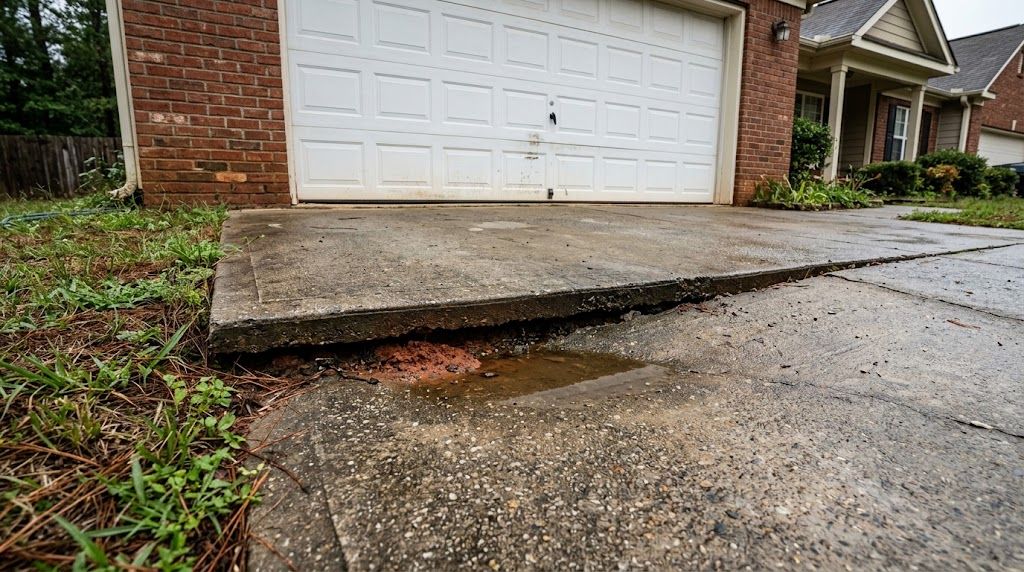
A driveway that has dropped an inch at the garage. A patio slab tilting toward the house. A front walk that has become a trip hazard. In metro Atlanta these almost always get quoted one of three ways: pump something under it, tear it out and pour new, or ignore it. Which one is right depends on why it sank, and most quotes skip that question.
Here is how to read a sinking slab, what the two lifting methods actually do, and when replacement is the honest answer.
Concrete Does Not Sink. The Ground Under It Does.
A slab is only as stable as whatever it sits on, and in Georgia that base fails for a short list of reasons.
Fill that was never compacted. Driveways, patios and walks get poured over the soil that was pushed around during construction. If that fill was not compacted in lifts, it keeps settling for years, and the slab follows it down. This is why the drop at the garage is so common: the garage slab sits on the compacted pad, the driveway sits on backfill against the foundation. We covered that specific case in why your driveway is separating from your garage.
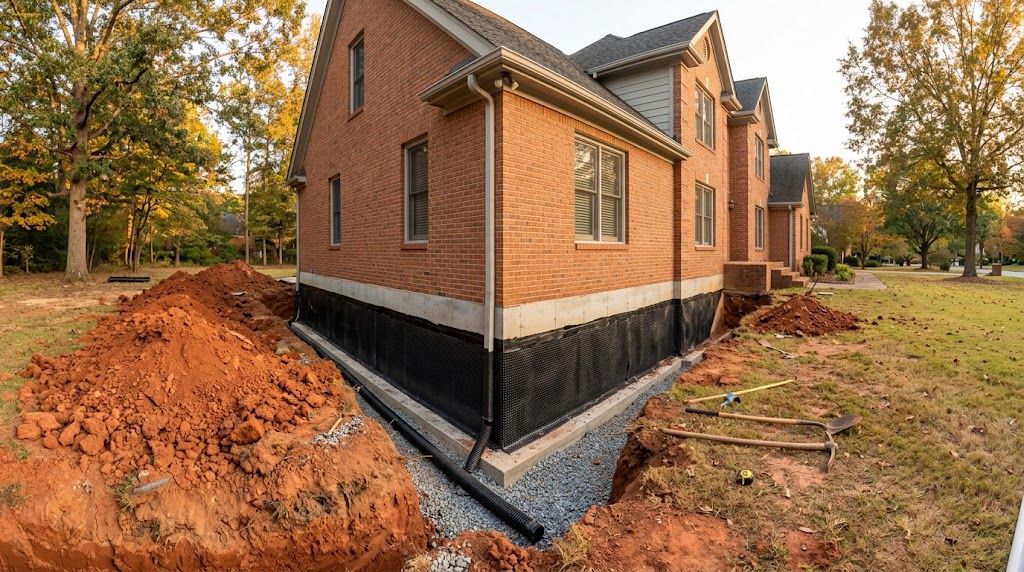
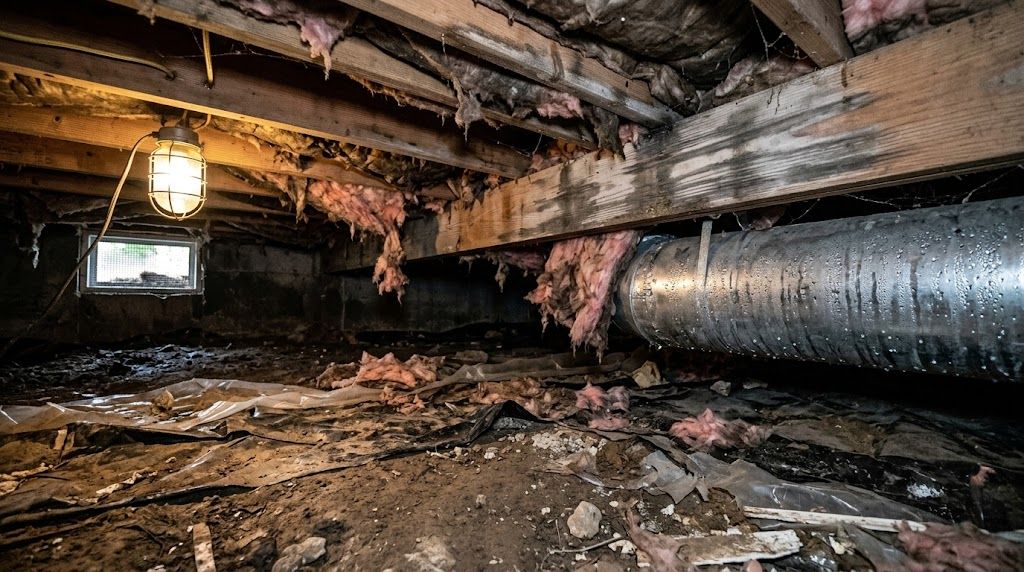
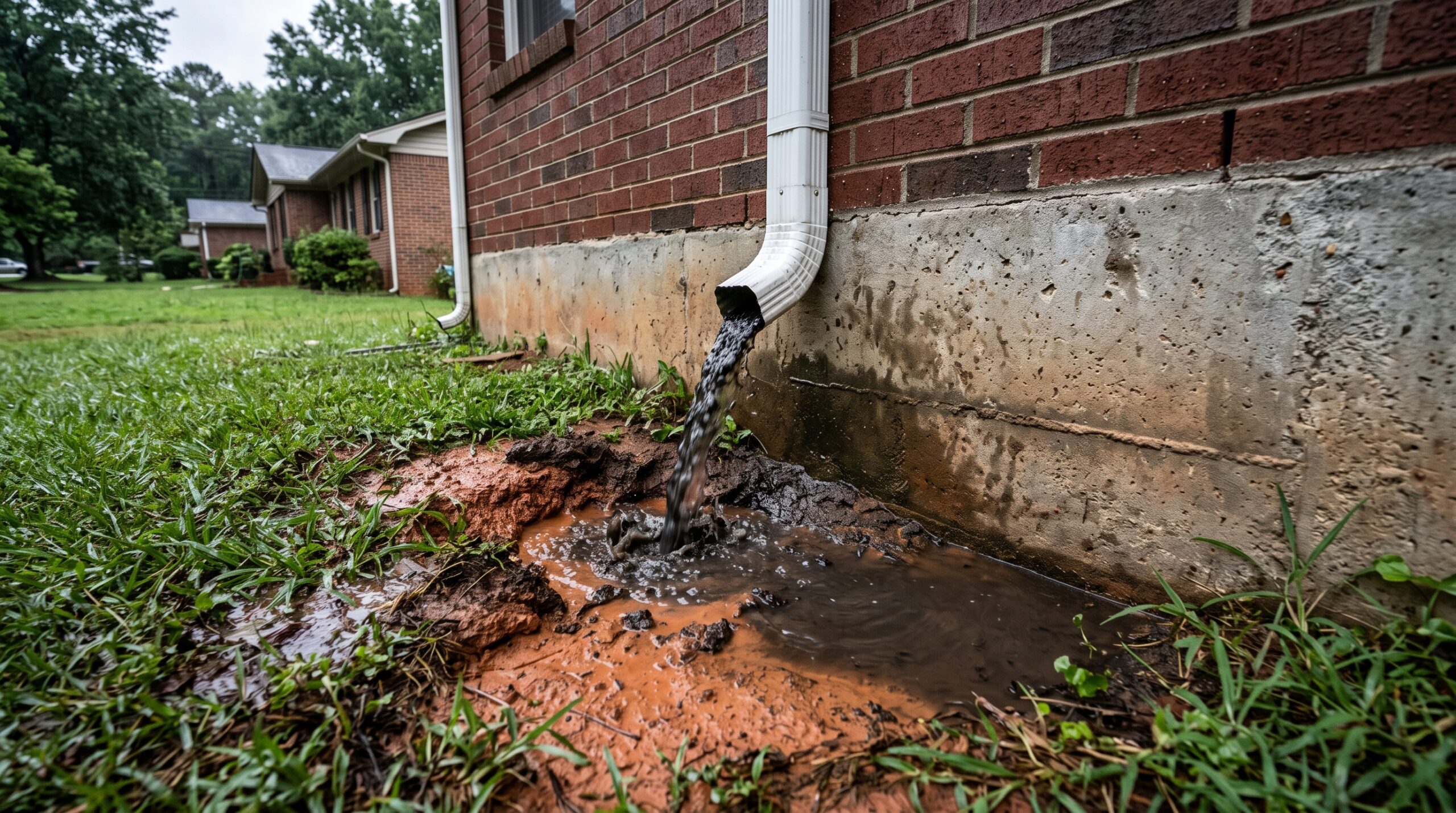
Water washing out the base. A downspout discharging beside the driveway, or runoff that flows under a patio edge, carries fine soil away one storm at a time. The slab stays put until the void under it is big enough, then it drops. The evidence is usually a wet stain along one edge, or a low corner near where the roof water lands. That is the same problem described in gutters, downspouts and foundation problems, showing up on concrete instead of in the basement.
Clay drying and shrinking. After a dry year like this one, the top layer of clay contracts. A slab on it settles unevenly and cracks. The mechanism is the one in soil pulling away from your foundation in dry weather, and it matters more this year because a wet winter is expected to follow, which will move that same soil the other direction.
Tree roots, burrowing animals, and broken drain lines round out the list. A leaking downspout drain or sewer lateral under a driveway can quietly excavate a void for years.
The reason the cause matters: lifting a slab over an active washout puts it right back where it started. Whoever quotes the lift should be able to tell you what made the void, and what they are doing about it. We wrote more about reading the symptoms in why your patio or sidewalk is sinking.
Lifting Option One: Mudjacking
Mudjacking is the older method. Holes roughly 1 to 2 inches in diameter are drilled through the slab, and a slurry of soil, sand, water and cement is pumped underneath until the slab rises. Per industry guidance, the slurry weighs over 100 pounds per cubic foot and typically needs 24 to 48 hours before the slab is back in use.
Two things follow from the weight. On a base that failed because it is weak, adding a hundred pounds per cubic foot of new material on top of it is a real load, and the slab can settle again. And because the slurry is soil-based, it can wash out the same way the original base did if the water problem is not fixed.
Where it still makes sense: large, heavy slabs on stable ground with a clear one-time cause, and budgets where the lower up-front price wins.
Lifting Option Two: Polyurethane Foam
Foam lifting, often called polyjacking, injects a two-part polyurethane through holes about 5/8 inch in diameter. The foam expands under the slab, fills the void, and lifts. It weighs roughly 2 to 4 pounds per cubic foot, cures fast enough that the slab is usually traffic-ready in about 15 minutes, and it does not absorb water or wash out.
The weight difference is the point. A base that has already shown it cannot carry the load does not get a heavier load. And because the material is waterproof, a lift over a base that has some residual moisture is less likely to come back.
Where it is the wrong choice: a slab that is broken into pieces, badly cracked, or heaved upward rather than sunk. Lifting reunites a slab with its base. It does not put a cracked slab back together.
When Replacement Is the Honest Answer
Some slabs should not be lifted, and a contractor who lifts everything is not doing you a favor.
- The slab is cracked through in multiple places. Lifting one piece leaves the others where they are.
- It is heaved, not sunk. A slab pushed up by roots or swelling soil needs the cause removed and usually a new pour.
- The surface is spalling or the concrete is crumbling. The slab itself is finished, regardless of what is under it.
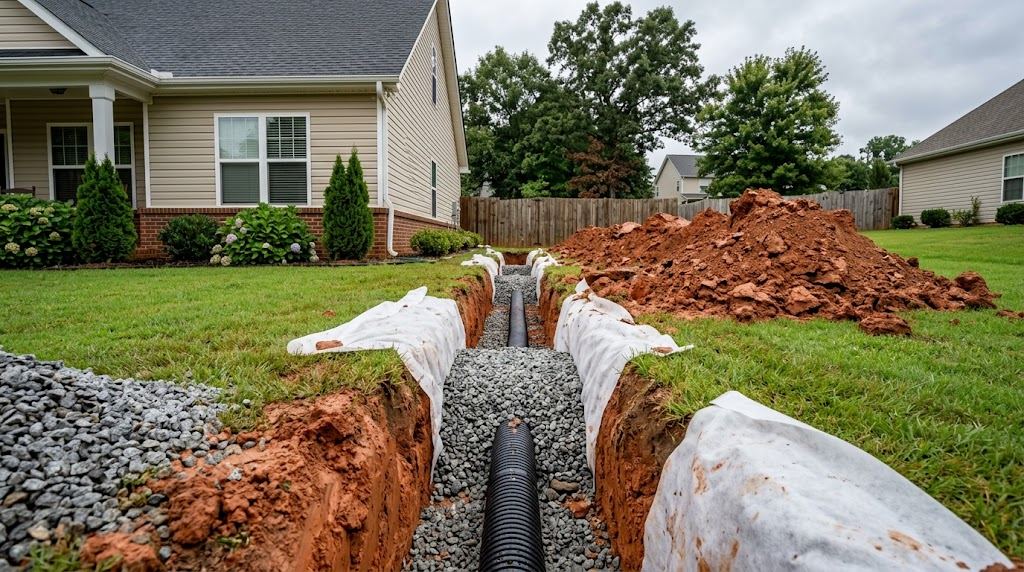
- The drainage was wrong from the start. A patio poured sloping toward the house will keep sending water at the foundation no matter how level it is. That is a case for a new pour with correct fall, which we covered in the grading rules in French drain, regrading, or dry well.
Replacement costs more and takes longer, but it is the only option that fixes both the slab and the base at once, with proper compaction and drainage built in.
Five Questions Before You Sign
- What caused the void, and what are you doing about it? If the answer is only the lift, the void will come back.
- Which method, and why this one for my slab? The answer should reference weight, base condition, and whether water is still moving under it.
- Is the slab structurally sound enough to lift? Ask them to show you where the cracks are and what happens to each piece.
- Where does the roof and surface water go after the job? If it still lands on the base, you are scheduling the next repair.
- What is the warranty against resettling, and is it transferable? Foam contractors often warrant against resettling; mudjacking warranties are usually shorter. Get it in writing.
Why the Season Matters
The ground under Atlanta slabs has been dry most of this year, and a strong El Niño points toward a wet winter, which we laid out in what an El Niño winter in Georgia means for your basement. Voids that opened up during the dry months are about to get water pushed through them. A slab that is already low will drop further, and a base that is already washing out will wash faster. Lifting is cleaner and the fix holds better when it is done on a dry base and paired with drainage before the rain, not after.
Get the Base Diagnosed, Then Fix the Slab
CGS Waterproofing & Foundations handles concrete work alongside the drainage and foundation repair that usually explains why the concrete moved, across metro Atlanta including Atlanta, Marietta, Alpharetta, Norcross and Athens. Full service area here.
Schedule an inspection and we will tell you why the slab moved, whether it can be lifted, and which method fits it.