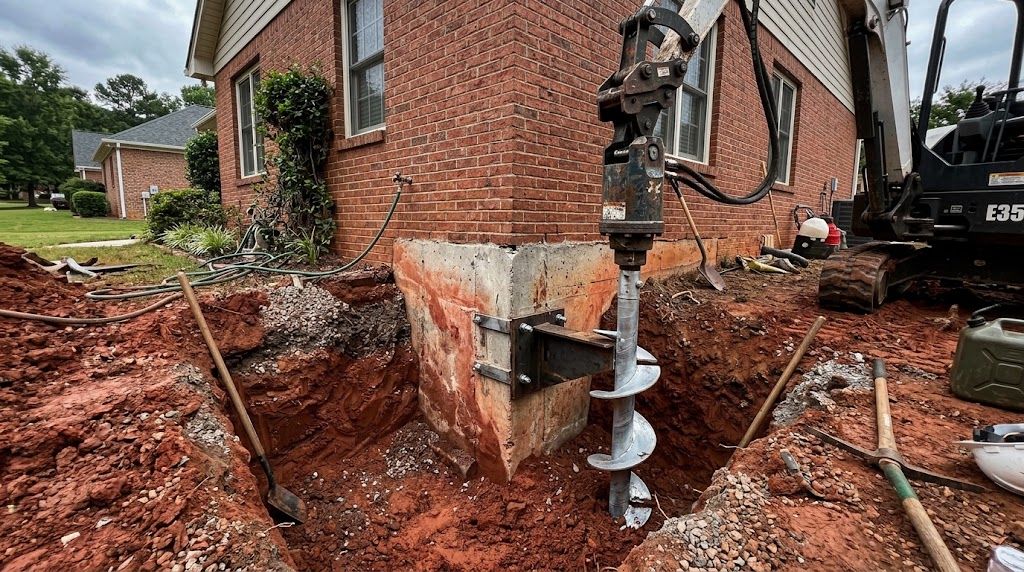
Every foundation repair company in metro Atlanta will tell you the same thing: your house sits on expansive clay, and expansive clay moves foundations. It is a good sales line. It is also, for most of the region, not what the soil survey says.
Foundation repair in Georgia starts with a question most proposals skip: which clay? Before you sign for piers, it is worth knowing what is actually under your house, because the answer changes which repair you should be buying, and whether you should be buying one at all.
What the Soil Survey Says About Georgia Red Clay
The dominant soil across the Georgia Piedmont, including most of metro Atlanta, is the Cecil series and its close relatives. The USDA’s official description classifies Cecil as fine, kaolinitic, and lists its shrink-swell potential as low. Kaolinite is the clay mineral that does not swell much. It is the reason Georgia red clay makes good bricks.
Compare that with the soils that genuinely wreck foundations. Where the Piedmont bedrock is diabase, gabbro or diorite, the weathered soil is the Iredell series and its cousins: mixed, active mineralogy, with shrink-swell potential rated very high in the clay layer. That is the Texas-style soil. Georgia has it, but in pockets, not everywhere.
So “you have clay” is not a diagnosis. Which clay, on which lot, is the question. You can look yours up for free: the USDA Web Soil Survey lets you draw your property on a map and read the mapped soil series and its engineering properties. It is a survey, not a site investigation, and a lot that was cut and filled during construction may not match the map. But it takes ten minutes and it tells you whether a contractor is describing your soil or reciting a script.
What Foundation Repair in Georgia Is Usually Fixing
If most of the region is low shrink-swell soil, why do foundations here still crack, settle and lean? Four reasons, roughly in order of how often we find them.
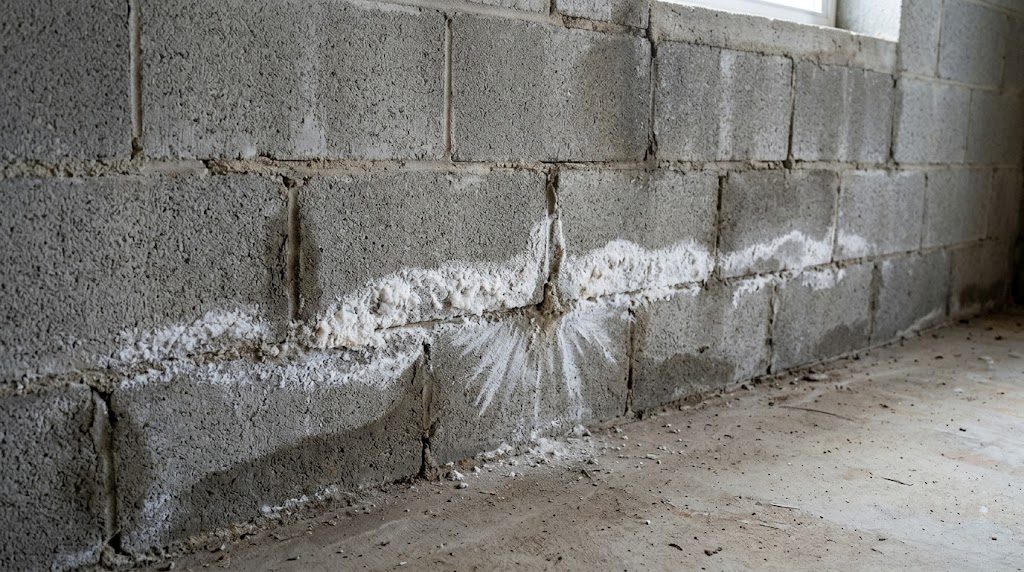
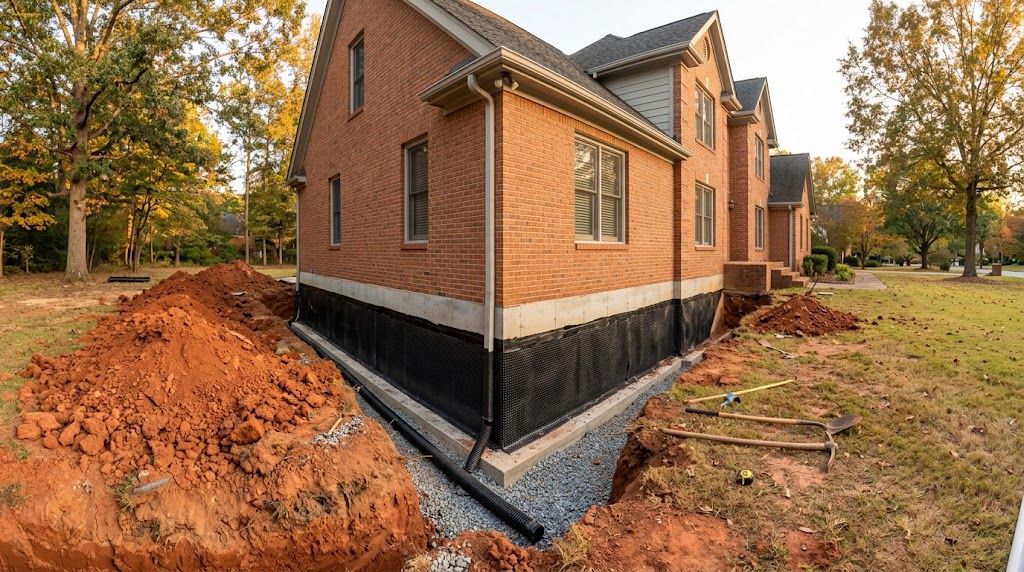
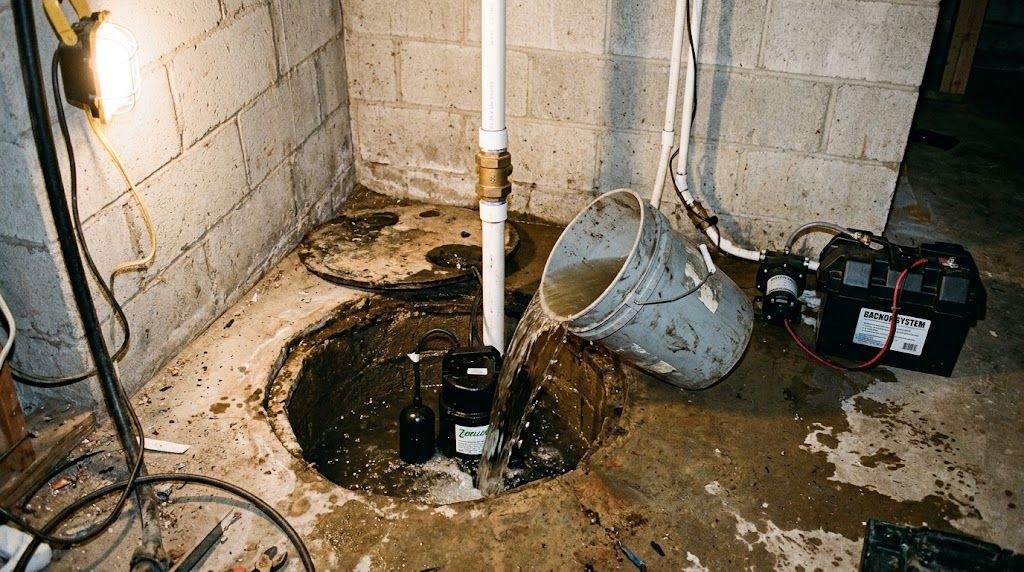
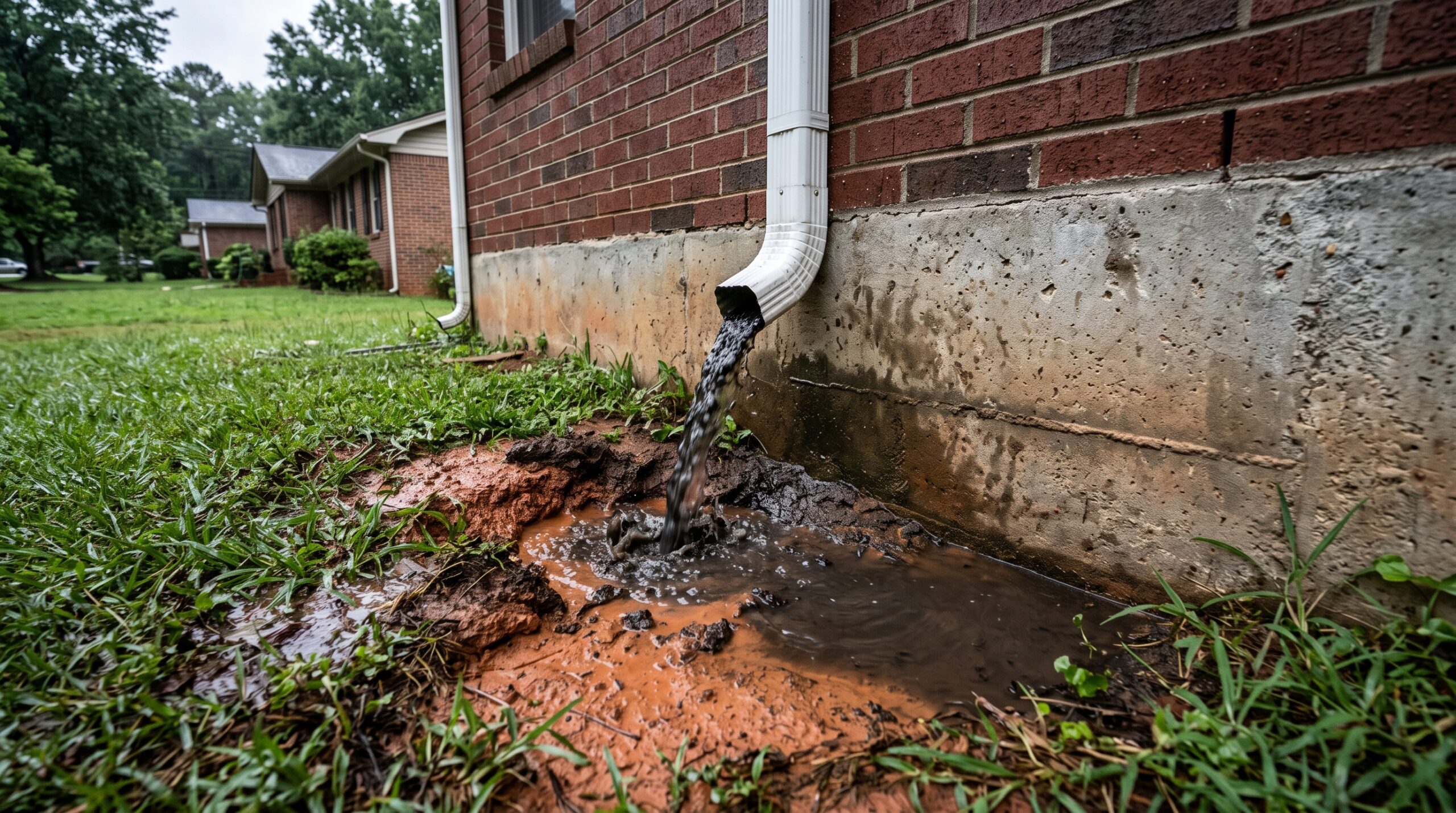
1. Water. Saturated soil loses bearing strength. Water moving through soil carries fines and creates voids. Hydrostatic pressure pushes on walls. Most foundation movement we see in metro Atlanta traces back to roof runoff, grading or groundwater, which is why we keep writing about gutters and downspouts and yard drainage. Water is the cause. Cracks are the symptom.
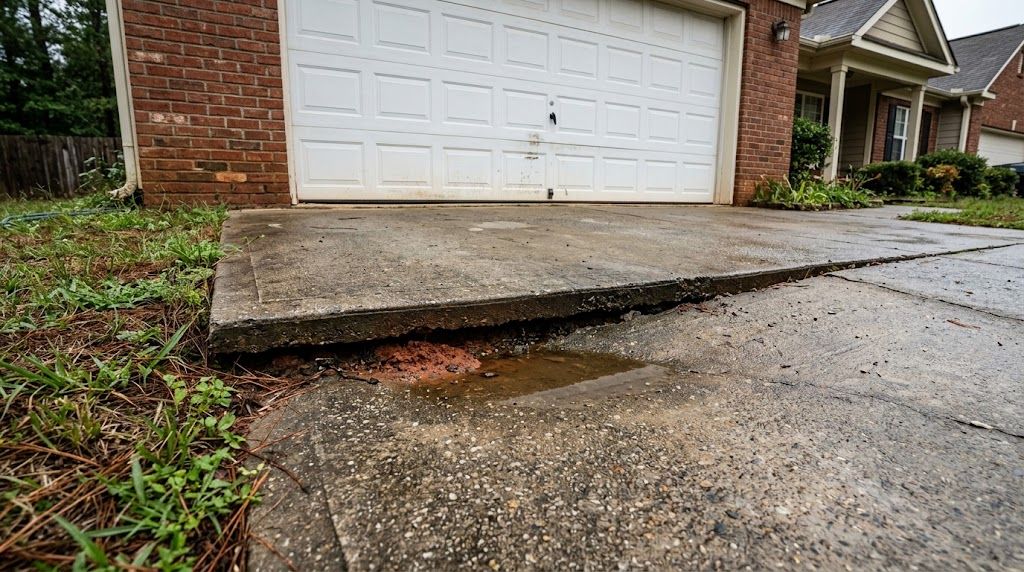
2. Fill that was never compacted properly. Metro Atlanta is hilly. A huge share of subdivisions were graded by cutting the high side of a lot and pushing the soil to the low side. A house whose footings sit partly on native soil and partly on fill settles unevenly, sometimes decades later. This has nothing to do with clay mineralogy and everything to do with how the lot was built.
3. Desiccation. Low shrink-swell is not zero. In a dry year like this one, the top layer of clay still contracts and cracks, and it pulls back from the foundation. We described that in soil pulling away from your foundation in dry weather. The volume change itself rarely damages a footing. What it does is open channels that send the next heavy rain straight down to the footing, which brings us back to reason one.
4. The actual expansive pockets. On the Iredell-type soils, seasonal swelling and shrinking really do lift and drop foundations. If your lot is mapped on one of these, the repair conversation is different, and a geotechnical engineer belongs in it.
Piers Fix Settlement. They Do Not Fix Water.
This is the distinction that saves homeowners the most money.
Underpinning a foundation with steel piers transfers its weight down to soil or rock that can carry it. That is the right answer when a footing has settled because the soil beneath it cannot hold the load. It is the wrong answer when the soil is fine and the problem is that it keeps getting saturated. In that case the piers hold, the water keeps coming, and the basement is still wet.
Any proposal that offers piers without also addressing where the water is coming from is solving the visible half of the problem.
Push Piers vs. Helical Piers
When underpinning is genuinely needed, there are two common systems, and the difference matters.
Push piers (also called resistance piers) are sections of high-strength steel pipe driven hydraulically through the weak soil until they reach rock or a load-bearing stratum. The house itself is the reaction: the installer pushes against the weight of the structure to drive the pier. That gives push piers a built-in proof test. Per manufacturer engineering guidance, each pier is field load tested after installation to a force well above what is needed to recover lost elevation. They work well where rock is at moderate depth and in tight spaces like basements with low overhead clearance. Their limitation is that they need enough structure weight to push against, which can be a problem on light single-story homes and additions.
Helical piers are steel shafts with screw-like helical plates welded to the end. They are rotated into the ground with a hydraulic drive head, advancing roughly three inches per rotation, until installation torque indicates the plates are seated in competent soil. Capacity is not proof-loaded by the house. It is calculated from the torque required to install the pier, using an empirical torque-to-capacity correlation, and the installer must monitor and record shaft torque continuously during installation. Helical piers do not depend on structure weight, so they suit lighter buildings, and they can find bearing in firm soil above bedrock where rock is very deep, which often makes them the lower-cost option.
Neither is universally better. The right one depends on how deep competent bearing is on your lot, how heavy the structure is, and how much access there is. A contractor who only ever proposes one system is usually proposing the one they own the equipment for.
Bowing Walls Are a Different Problem
Settlement is vertical. A basement wall that is bowing inward or shearing along a mortar joint is being pushed horizontally, almost always by saturated soil and hydrostatic pressure. Piers do nothing for that. The answers there are wall anchors, carbon fiber reinforcement, or interior bracing, sized to the amount of movement, and again paired with drainage so the pressure stops. If you are seeing horizontal cracks, that is the category you are in. We covered how to read cracks in foundation cracks: when to worry and how to fix them.
Six Questions to Ask Before You Sign
- What soil is my lot mapped on, and did you check? If the answer is just “clay,” keep asking.
- Is this settlement, or is this water? Ask them to show you the evidence for each.
- How deep is competent bearing here, and how do you know? Depth to rock or firm strata drives which pier system fits and what it costs.
- How will you verify each pier’s capacity? Load test, torque log, or neither. Ask to see the records afterward.
- What are you doing about the water? If the proposal does not include drainage, ask why.
- What does the warranty cover, and does it transfer to the next owner? A transferable warranty is worth real money when you sell.
Why the Timing Is Not Neutral This Year
Georgia has been dry most of this year and a strong El Niño points toward a wetter than usual winter for the Southeast. We laid that out in what an El Niño winter in Georgia means for your basement. For foundations the practical version is simple: dry-season cracks are open right now, and a wet winter will put water through them. Any settlement that is already underway shows itself fastest in that transition. It is a good season to get a proper evaluation, and a bad one to guess.
Get a Diagnosis, Then a Repair
CGS Waterproofing & Foundations does foundation repair, underpinning, wall stabilization and concrete work across metro Atlanta, including Atlanta, Marietta, Alpharetta, Norcross and Athens, alongside the drainage and waterproofing work that usually has to come with it. Full service area here.
Schedule an inspection and we will tell you what your foundation is doing, what is causing it, and whether you need piers at all.