A 2,000 square foot roof in Atlanta sheds roughly 1,246 gallons of water in a single one-inch rainstorm, and about 62,800 gallons over an average year. Every drop of it lands on your gutters and leaves through your downspouts.
That is the entire argument. Gutters are not a roof accessory — they are the first stage of your foundation’s drainage system, and when they are undersized, clogged, or discharging two feet from the wall, they become the most reliable source of basement water a house has.
How Gutters and Foundation Problems Are Connected
The arithmetic is simple and worth doing on your own house. One inch of rain produces about 0.623 gallons per square foot of catchment area. Multiply your roof footprint by that number and you have the volume from a single modest storm.
Atlanta averages 50.4 inches of precipitation a year. Athens runs about 49 inches, Rome 55.1, Gainesville 55.6. These are not desert numbers.
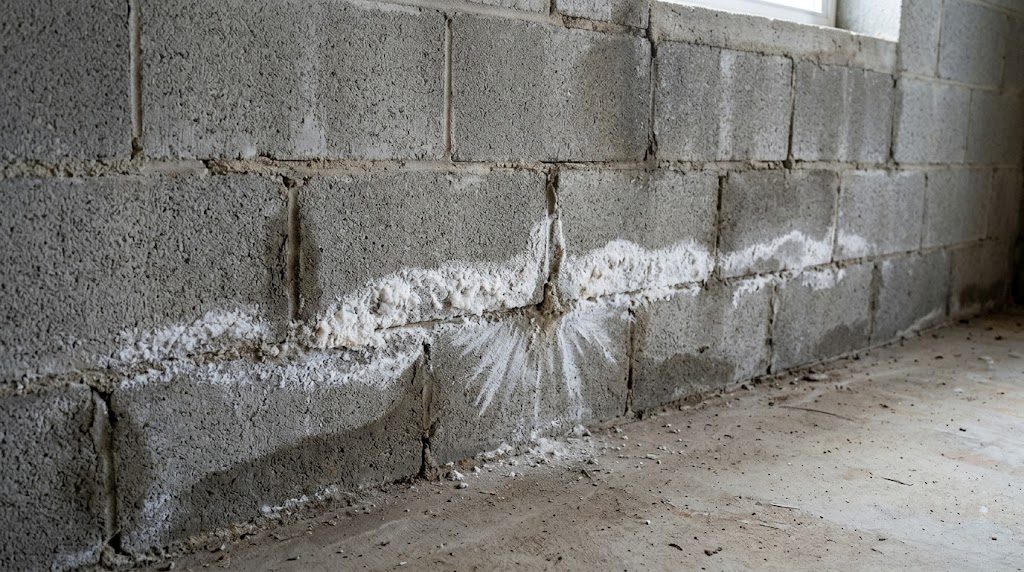
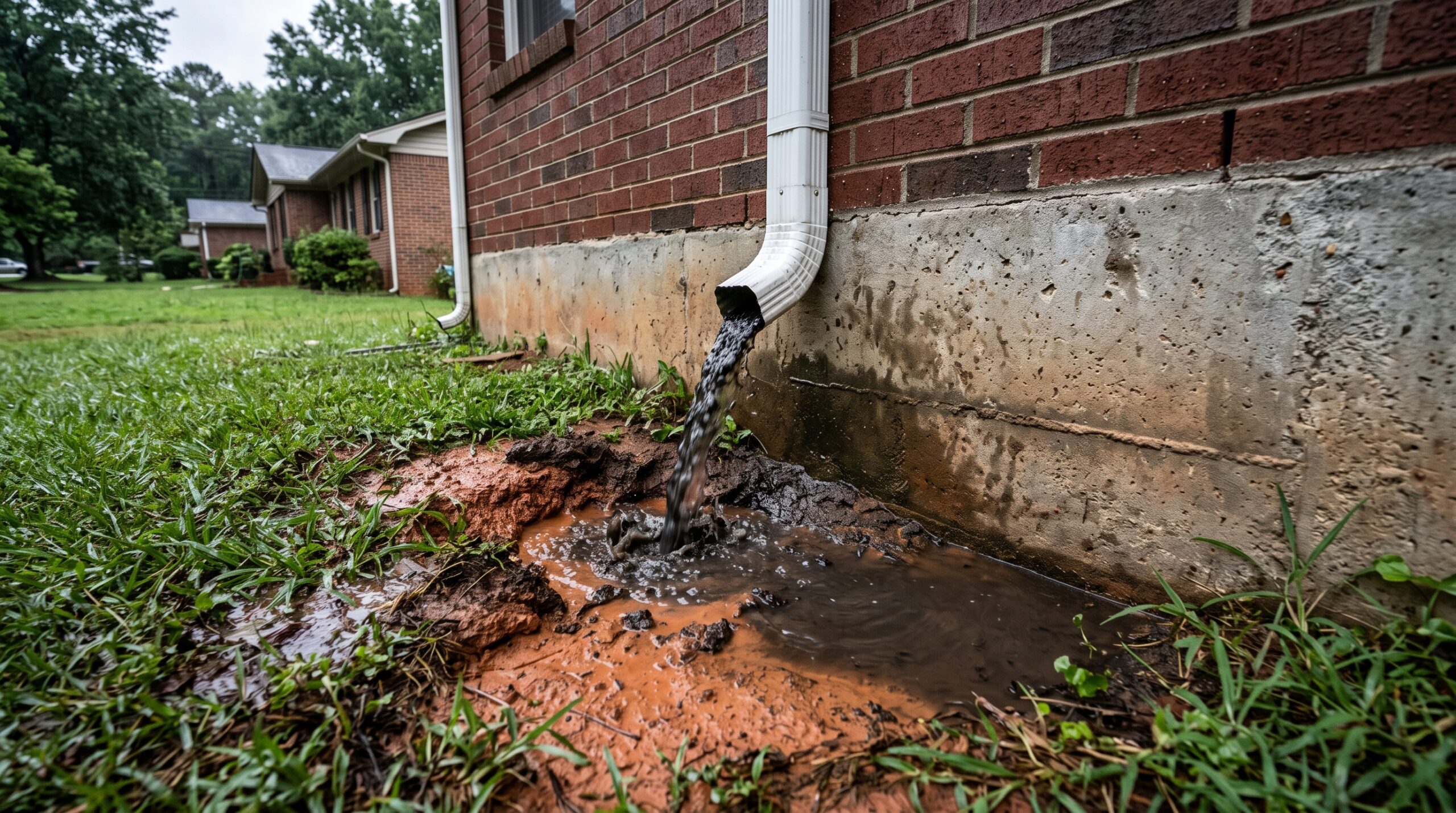
Now consider where that water goes. If a downspout discharges at the base of the wall, you are pouring roughly a thousand gallons per storm into the soil immediately against your foundation — the exact soil that has to stay as dry as possible for the foundation to stay dry. In Georgia clay, that water does not disperse quickly. It sits, it saturates, and it builds hydrostatic pressure against the wall and the floor slab.
This is why so many “mystery” basement leaks turn out to have a downspout twelve feet directly above them.
Your Gutters May Simply Be Too Small
Gutter size is not decoration, and most homeowners have never checked whether theirs match the roof.
Standard capacity figures, per published sizing guidance:
- 5-inch K-style gutter: handles up to roughly 5,520 square feet of drainage area
- 6-inch K-style gutter: roughly 7,960 square feet
Those numbers get adjusted for roof pitch. A steeper roof delivers water faster, so a 6-in-12 to 8-in-12 slope carries a 1.1 multiplier, and 12-in-12 or steeper carries 1.3. A steep roof with 5-inch gutters can overflow even though the raw square footage looks fine on paper.
Downspouts Are Usually the Real Bottleneck
Gutters collect. Downspouts evacuate. Undersized or too-few downspouts are the more common failure, and the easiest to check.
The rule of thumb is about 1 square inch of downspout cross-section for every 100 square feet of roof. In practice:
- 2×3-inch rectangular downspout: serves roughly 600 square feet
- 3×4-inch rectangular: roughly 1,200 square feet
- 3-inch round: roughly 706 square feet
- 4-inch round: roughly 1,255 square feet
Run the numbers on a typical 2,000 square foot roof. With standard 2×3 downspouts, you need at least three or four of them. Plenty of Atlanta houses have two. In a one-inch storm that means each one is trying to pass over 600 gallons, and what it cannot pass comes over the front lip of the gutter — landing, of course, directly against the foundation.
One more spacing guideline worth knowing: any gutter run of 60 feet or longer should have at least two outlets. A single outlet on a long run leaves standing water at the far end, which is both an overflow point and a place for debris to pack.
The Fall Problem Specific to Georgia
Metro Atlanta is heavily wooded, and leaf drop runs from roughly October into early December — precisely when the seasonal rain pattern is picking up. It is a bad overlap: gutters fill with debris right as the volume increases.
A packed gutter does not merely fail to carry water. It concentrates it. Instead of a designed system distributing runoff across several downspouts, you get one or two overflow points dumping the entire roof’s output onto a single strip of soil, storm after storm.
Guards help, and they are worth considering under heavy tree cover, but no guard eliminates maintenance. What they change is the frequency and the risk of the ladder work.
The Five-Minute Diagnostic
Do this during the next real downpour, not after it. Put on a jacket and walk the perimeter.
- Is water coming over the front edge of the gutter anywhere? That is either a clog or undersizing. Note where.
- Is water sheeting off a valley or a roof corner without entering a gutter at all? Common on additions and dormers.
- Where does each downspout actually discharge? Follow it. If the water lands within a few feet of the wall, that is your priority fix.
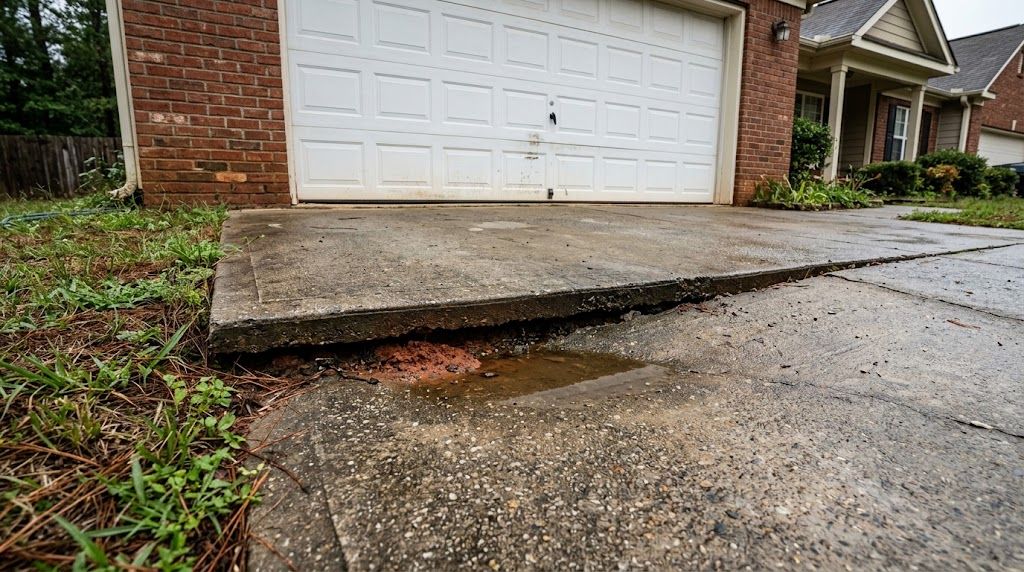
- Is the ground at the discharge point eroded, splashed, or holding a puddle? Puddling within 10 feet of the foundation means the water is going down rather than away.
- Count your downspouts against the table above. Roof footprint divided by the rating of your downspout size gives you the number you should have.
What To Actually Do
In order of cost, and the first two solve a large share of cases:
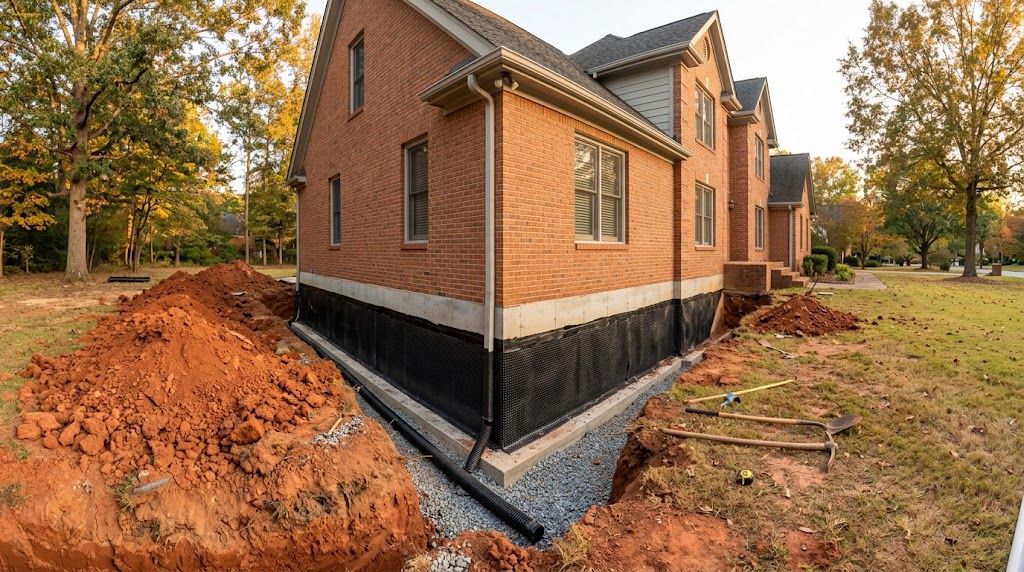
- Extend every downspout. Get discharge at least 4 to 6 feet from the foundation, and further if the ground is flat. This is the highest-return fix available to a homeowner and it costs very little.
- Clean them, then clean them again in December. One fall cleaning before leaf drop finishes is not enough under Georgia hardwoods.
- Add downspouts if the count is short. Cheaper than replacing all the gutters, and it is frequently the actual problem.
- Upsize to 6-inch gutters with 3×4 downspouts where the roof area, pitch, or tree load justifies it. Gutters and guards done once, correctly, cost less than the repeated consequences.
- Give the water somewhere to go. Extensions only relocate the problem if the yard cannot drain. That is where drainage comes in — and we covered how to choose between the options in French drain, regrading, or dry well.
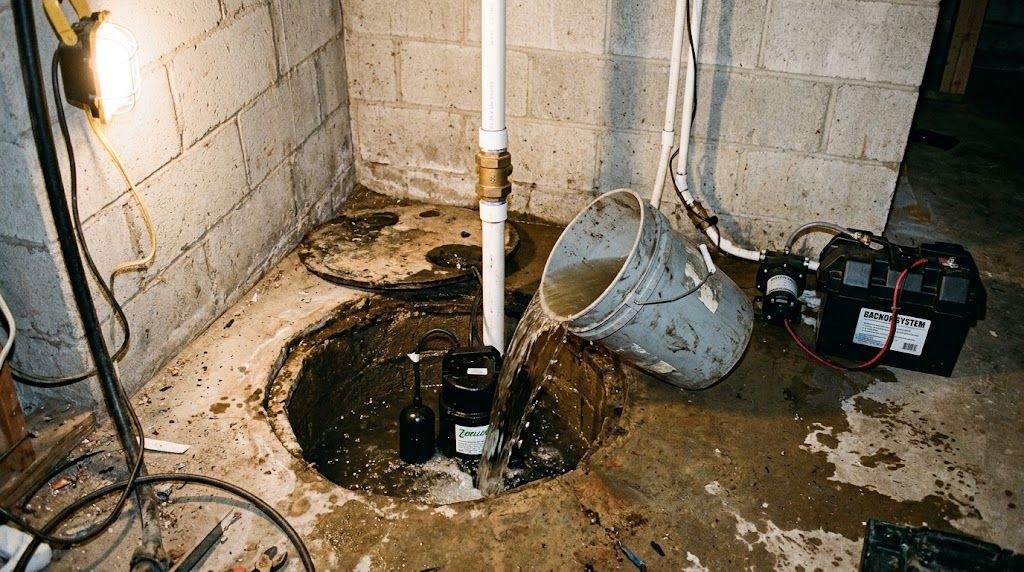
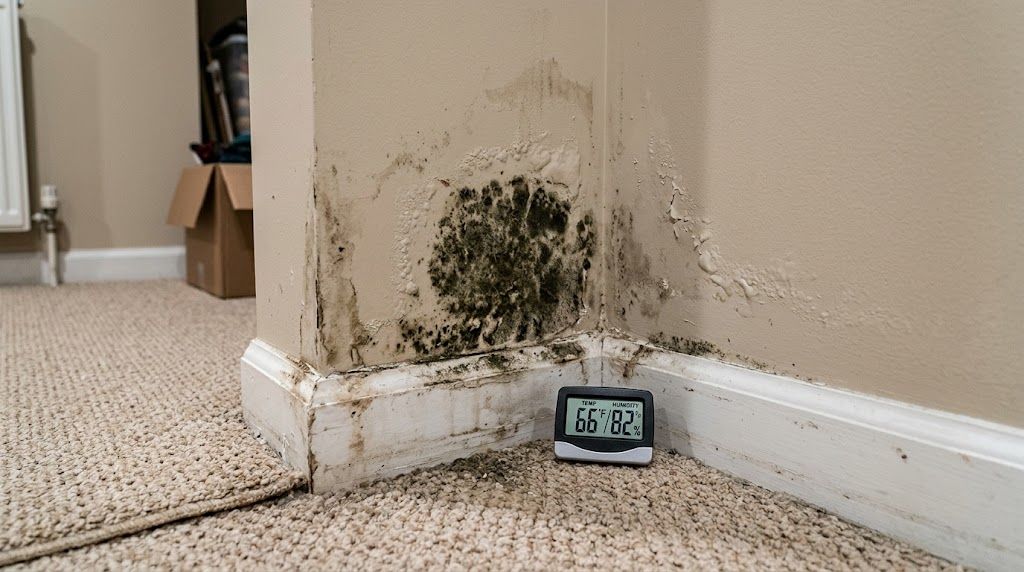
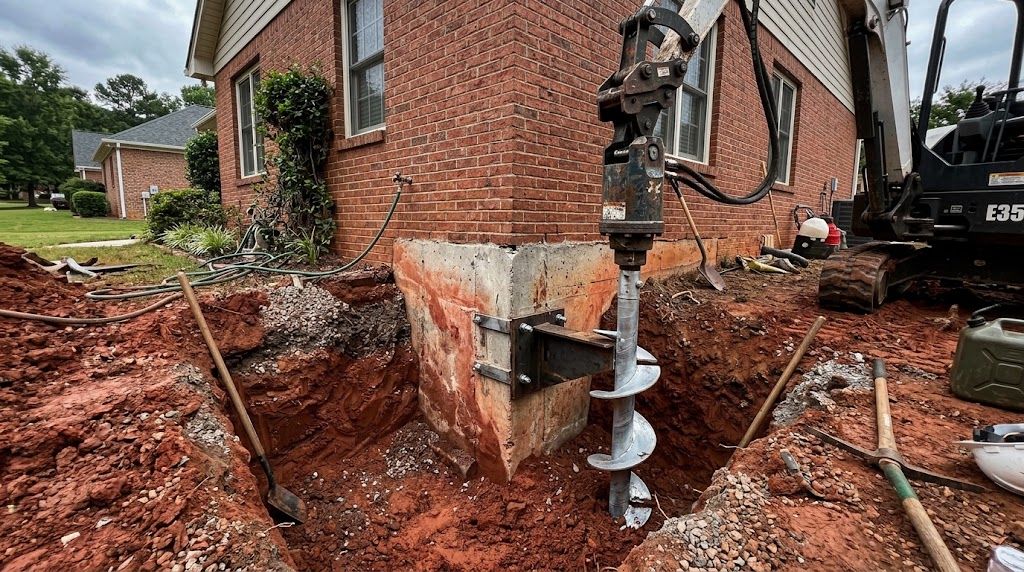
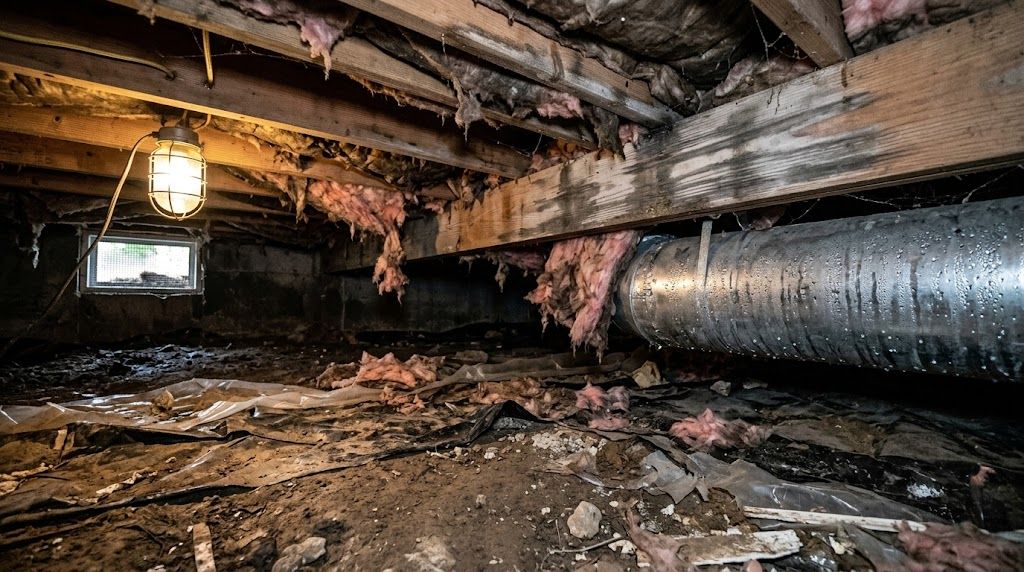
- Fix what already got in. If water has reached the basement or crawl space, gutters alone will not undo it. For crawl spaces specifically, start with whether the vents should be open or closed. That is a waterproofing problem, and if cracks are widening or a wall is bowing, a foundation repair one.
Why This Fall Matters More Than Most
Two conditions are stacking up.
Georgia soil has been dry for most of this year, which means the clay has contracted and pulled back from foundations — the mechanism behind soil pulling away from your foundation in dry weather. Those gaps are open pathways, and an overflowing gutter aims a concentrated stream straight into them.
On top of that, a record-strength El Niño is pointing a likely wet pattern at the Southeast this winter, which we covered in what an El Niño winter in Georgia means for your basement. Dry, cracked soil plus a wet winter plus a gutter system that concentrates rather than distributes is the combination that produces water coming up through the basement floor after rain.
And if the assumption is that insurance would cover the result, it very likely would not — groundwater seepage is excluded from standard policies, as we broke down in does homeowners insurance cover basement water damage in Georgia?
Start With the Cheapest Fix in the House
Of everything a homeowner can do to protect a foundation, moving roof water further from the wall has the best ratio of cost to consequence. It is worth doing before anyone quotes you anything larger.
CGS Waterproofing & Foundations handles gutters and guards, drainage, waterproofing, crawl space and foundation work across metro Atlanta — including Atlanta, Marietta, Alpharetta, Norcross and Athens, plus the rest of our service area.
Schedule an inspection before leaf season and we will tell you whether your gutters are sized for your roof and where your water is actually ending up.