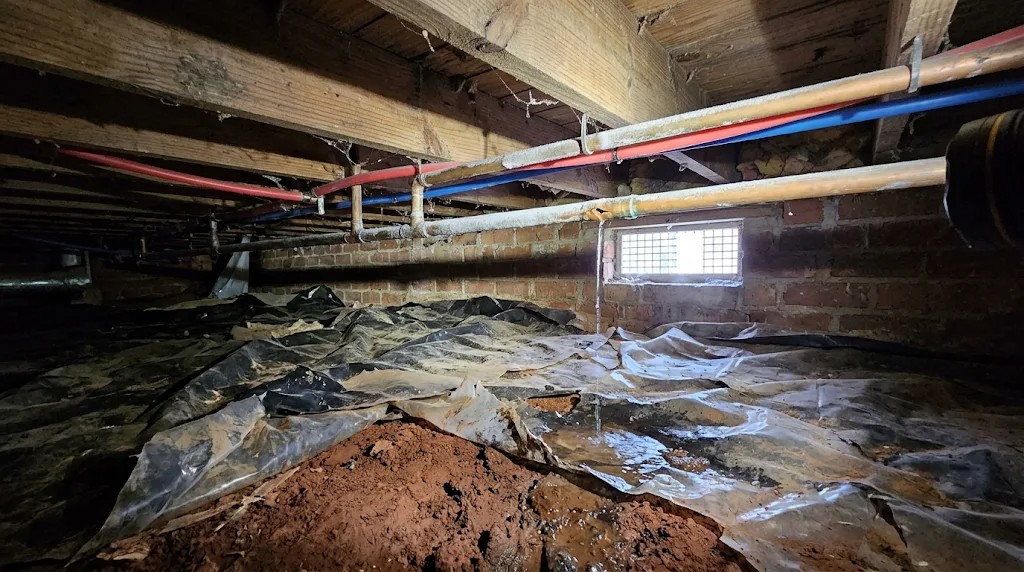
Frozen pipes in a crawl space are one of the most common winter repair calls in Georgia, and they surprise people because the cold snaps here are short. A few nights in the low 20s is enough. The pipe splits while it is frozen, and you find out when it thaws and water starts pouring into the crawl space, sometimes for days before anyone notices.
Here is why frozen pipes in a crawl space are so common, the warning signs, what to do if one freezes, and the permanent fixes that keep it from happening every winter.
Why Crawl Space Pipes Freeze First
Most Georgia homes with a crawl space have a vented one, open to outside air through foundation vents. The water lines run right through that space. The American Red Cross lists pipes in unheated areas like crawl spaces among the most vulnerable in a house, along with attics, garages and pipes against poorly insulated exterior walls.
How cold is too cold? The International Code Council, citing the Insurance Institute for Business & Home Safety, notes that unprotected pipes begin to freeze when outdoor temperatures drop to about 20 degrees Fahrenheit. The U.S. Department of Energy gives the same rough threshold for southern states. Metro Atlanta hits that range during most winter cold snaps, and a vented crawl space with the wind blowing through it gets there faster than the rest of the house.
The building code recognizes the risk. Under the International Residential Code, water piping in places like crawl spaces and exterior walls has to be protected from freezing with insulation, heat or both. The ICC article is direct about one point most homeowners miss: insulation by itself, without a heat source, cannot protect a pipe from freezing. It only slows the heat loss.
Warning Signs a Pipe Has Frozen
- Only a trickle comes out of a faucet on a cold morning, or nothing at all. The Red Cross treats this as the first sign of a frozen pipe.
- One fixture works and another does not. The frozen section is usually on the line feeding the fixture that stopped.
- Frost on exposed pipe you can see through the crawl space access.
- Running water sounds under the floor after a cold night, or a water bill that jumps. That usually means a pipe already split and is now leaking.
If a Pipe Freezes: What to Do (and Not Do)
The Red Cross guidance is simple. Keep the faucet open so water can move as the ice melts. Apply gentle heat to the frozen section with a heating pad, a hair dryer, or a space heater kept away from anything flammable. If you cannot reach or thaw the pipe, call a licensed plumber.
Two rules matter most:
- Never use an open flame. No blowtorch, propane or kerosene heater, or charcoal stove, especially in a crawl space with wood framing and dry insulation overhead. Both the Red Cross and the ICC are explicit about this.
- Know where your main shutoff is before you need it. If the pipe has split, shut off the water supply right away to limit the flooding.
The Hidden Damage After a Burst
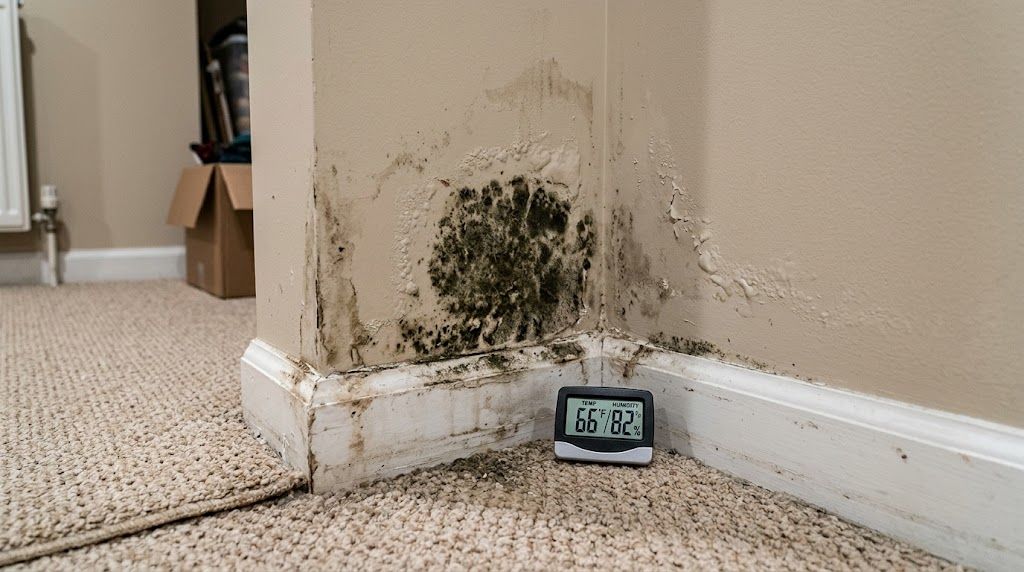
A burst crawl space pipe is not just a plumbing repair. Water soaks the vapor barrier, the soil and the insulation between the floor joists. Wet fiberglass sags and falls out. Standing water raises the humidity under the whole house, and wood that stays damp grows mold. We covered what the EPA recommends in mold in your Georgia basement, and the same rule applies under the house: dry it fast, ideally within 24 to 48 hours.
After the plumber fixes the pipe, have the crawl space checked for standing water, wet insulation and damp framing. Many of the musty smells and cold floors homeowners notice in spring trace back to a winter leak nobody saw. We explained those symptoms in why your house smells damp even without rain and why your floors are cold even with the heat on.
How to Prevent Frozen Pipes in a Crawl Space: 5 Quick Steps
Most of these come from the Red Cross and the Department of Energy, and they cost little or nothing:
- Insulate exposed pipes in the crawl space with foam pipe sleeves, and seal gaps where cold air blows directly on them.
- Keep the thermostat steady day and night during a cold snap. If you travel, the Red Cross says to keep the heat no lower than 55 degrees.
- Let a faucet drip on lines that run through the crawl space on the coldest nights. Moving water is harder to freeze.
- Disconnect hoses and drain outdoor spigots before the first hard freeze.
- Close or cover crawl space vents and access doors during the cold snap, and reopen them only if your crawl space still depends on them for ventilation.
The Permanent Fix: Bring the Pipes Inside
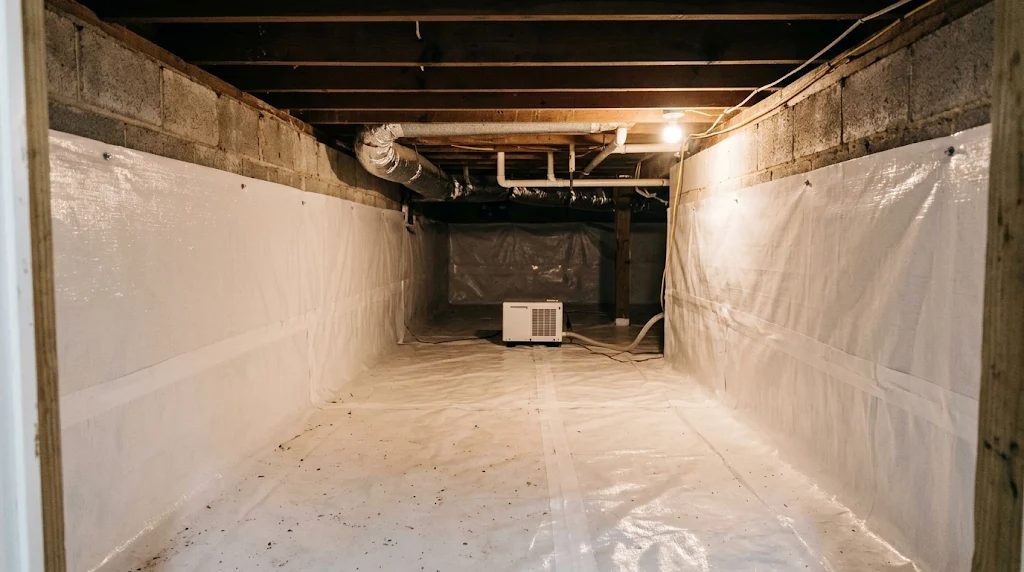
The quick steps work for a night or two. They do not change the reason the pipes freeze, which is that they sit in a space open to outdoor air. Closing off that air is what stops frozen pipes in a crawl space for good. Atlanta building scientist Allison Bailes of Energy Vanguard makes this point in his take on freeze warnings: the reliable answer is to get pipes inside the conditioned space, and if they are in a vented crawl space, to encapsulate it. A sealed crawl space stays much closer to the temperature of the house, so the pipes running through it are no longer exposed to the wind and the overnight lows.
Where pipes have to stay in a cold area, he recommends insulation plus self-regulating heat cable, which turns itself on and off. The Red Cross also points to UL-listed heat tape for exposed lines.
Encapsulation has to be done to code to work, with a sealed vapor barrier and a way to keep the space dry. We broke down what that involves in crawl space encapsulation in Georgia, and the research behind closing vents in should crawl space vents be open or closed in Georgia?
Get Your Crawl Space Ready for Winter
CGS Waterproofing & Foundations seals and protects crawl spaces across metro Atlanta, cleans up and dries them after leaks, and handles mold remediation when the framing has been affected. We work in Atlanta, Marietta, Alpharetta, Norcross and Athens. Full service area here.
Schedule a free inspection and we will check your crawl space for the cold air, moisture and exposed plumbing that lead to frozen pipes in a crawl space, before the next hard freeze.