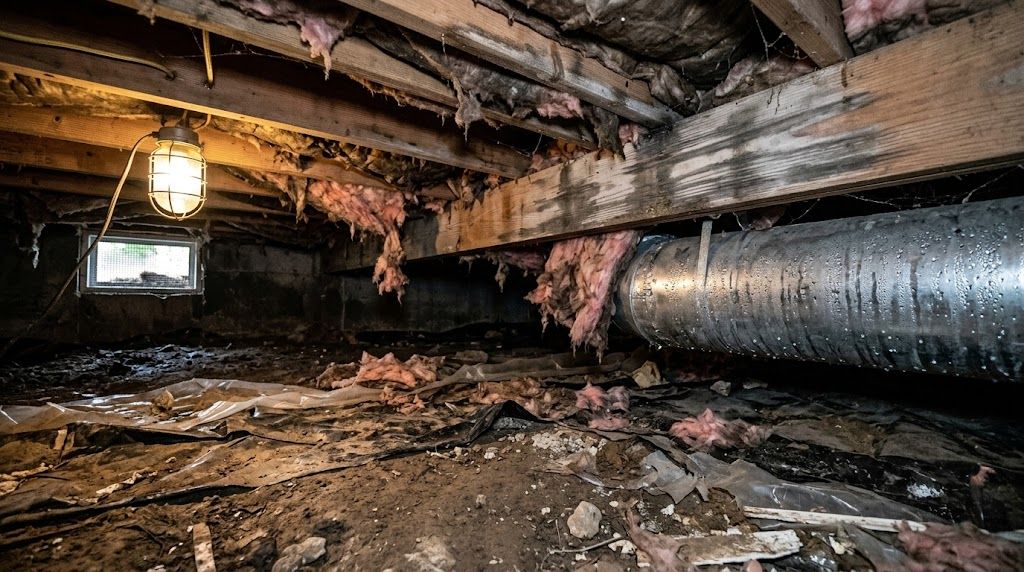
Almost every Georgia homeowner has been told the same thing: crawl space vents let the space breathe, so keep them open. It is one of the most durable pieces of bad advice in American home maintenance, and the measurements stopped supporting it more than twenty years ago.
In a humid Southern summer, opening your crawl space vents does not dry the space out. It is the mechanism that soaks it.
Why Venting a Crawl Space in Georgia Backfires
The physics is not complicated. Warm air holds far more water vapor than cool air. On a July afternoon in Atlanta, outdoor air arrives loaded with moisture. It enters through the vents, meets a crawl space that sits several degrees cooler than outside, and cools down.
Cooling that air does not remove the water. It just reduces how much water the air can hold. Relative humidity climbs, and when it reaches saturation the moisture leaves the air and lands on the coolest surfaces available — ductwork, joists, subfloor, insulation.
The result, as building science research describes it, is that vented crawl spaces track outdoor humidity and frequently run higher than the outdoor air. You are not ventilating. You are importing water.
The Study That Settled It
This is not a manufacturer’s claim. Advanced Energy, a North Carolina research organization, ran a field study for the U.S. Department of Energy on twelve matched single-family homes on a single cul-de-sac, divided into three groups of four. They instrumented energy use, humidity, wood moisture content, infiltration, temperature, radon and bioaerosols, and compared traditional vented crawl spaces against closed ones with sealed wall vents and a sealed polyethylene liner.
The conclusion was unambiguous: a properly closed crawl space is a robust construction measure that produces a substantially drier crawl space and significantly reduces the energy used to condition the house above it.
In the humidity data, the closed crawl spaces held below 60 percent relative humidity through the summer. The vented ones followed the outdoor curve — and often sat above it.
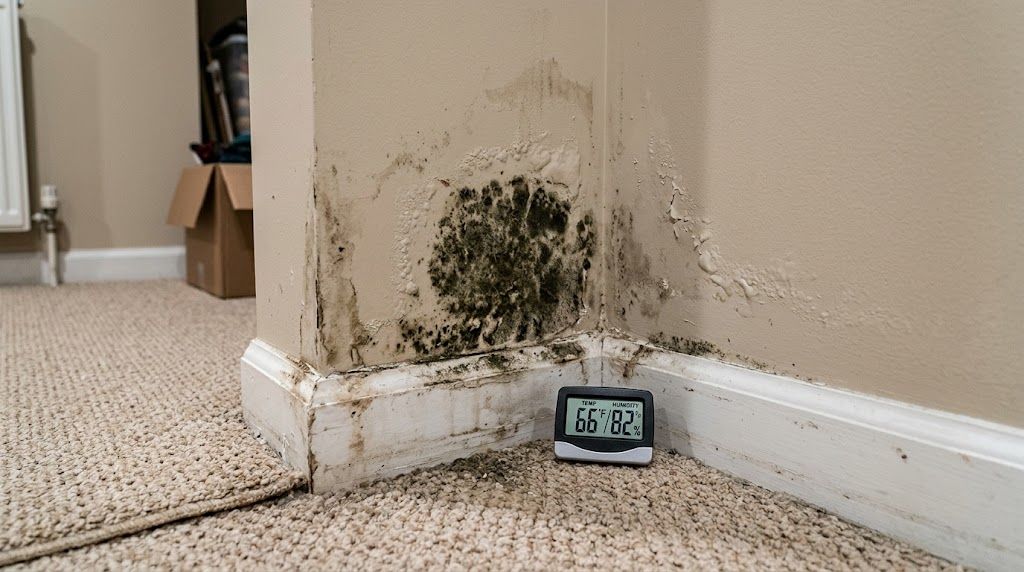
Sixty percent matters. Below it, mold has a hard time establishing. Above it for weeks at a time, in the dark, on wood, it does not.
The Building Code Already Allows the Alternative
Many homeowners assume vents are mandatory. They are one of two permitted options, and have been for years.
The vented path (IRC R408.2) requires net ventilation opening area of at least 1 square foot for every 150 square feet of under-floor area, with one opening within 3 feet of each external corner and covering openings no larger than 1/4 inch to keep pests out.
Note what happens next in the same section: if an approved Class I vapor retarder is laid over the ground, the required vent area drops to 1 square foot per 1,500 square feet — a 90 percent reduction. The code is telling you plainly that the ground is the moisture source and that covering it is worth ten times more than ventilating.
The unvented path (IRC R408.3) requires a continuous Class I vapor retarder over all exposed earth, with joints overlapped at least 6 inches and sealed or taped, extended at least 6 inches up the stem wall and sealed there. Then one of the following:
- Continuously operated mechanical exhaust at 1 CFM per 50 square feet of crawl space, with an air pathway to the common area
- Conditioned air supplied at 1 CFM per 50 square feet, with a return pathway and insulated perimeter walls
- A dehumidifier sized per the manufacturer’s specifications
- Plenum use, for existing structures only
That last detail is the one most people miss. Sealing a crawl space is not just laying plastic and closing the vents. A sealed space with no drying mechanism is a sealed space that stays wet. The liner and the air management are one system, and doing half of it is worse than doing neither.
What a Wet Crawl Space Actually Costs You
The damage does not stay under the house.
- Wood decay and structural rot. Sustained high moisture in joists, sills and subfloor is how framing fails slowly and expensively.
- Mold. Dark, damp, undisturbed and organic is the ideal case. Spores do not stay put — air moves upward through a house, so crawl space air becomes indoor air. That is a mold remediation problem before it is anything else.
- The smell. If your house smells musty and you cannot find the source, look down. We covered this in why your house smells damp even without rain.
- Pests. Damp wood attracts termites and the insects that eat them, which is usually the real answer to bugs coming from the crawl space.
- Cold floors and higher bills. Wet insulation stops insulating, and it falls. That is often the cause of cold floors even with the heat on.
Check Yours Before Winter
You do not need instruments to learn most of what matters. Take a flashlight and go look.
- Is there bare dirt anywhere? Exposed soil is a continuous evaporation surface. Even in dry weather it releases water upward, every day.
- Is the plastic torn, partial, or just loose? A liner that stops short of the walls, is not sealed at the seams, or has been shredded by pests and tradespeople is not doing the job the code describes.
- Is the fiberglass insulation sagging, dark, or on the ground? That is a moisture readout. Dry insulation stays where it was installed.
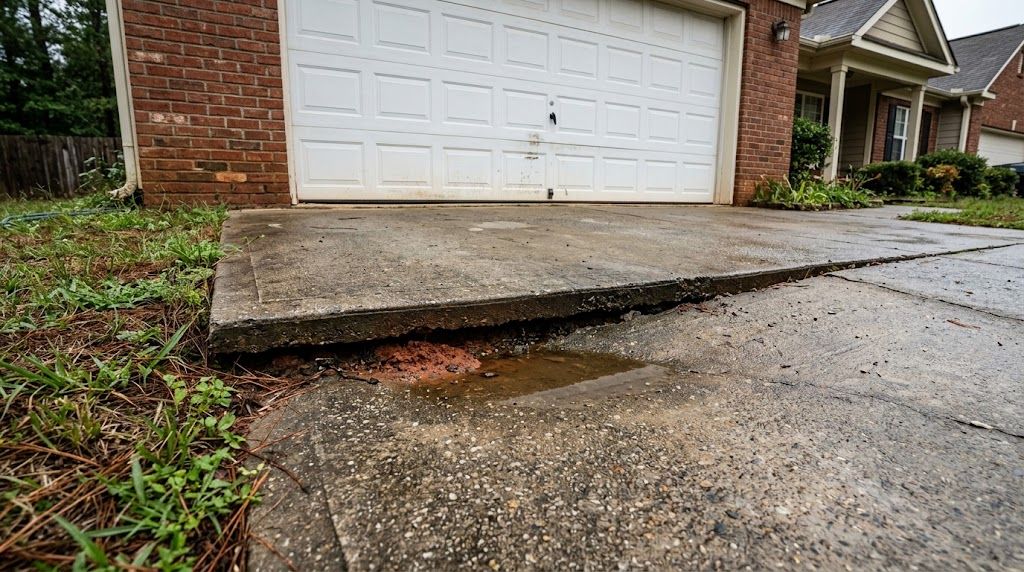
- Any standing water, mud, or a tide line on the piers? That is a drainage problem, not a humidity problem, and it has to be solved first.
- Do the ducts have condensation on them? Water beading on cold ductwork in summer is the exact mechanism described above, happening in front of you.
- Does the wood look grey, streaked, or fuzzy? Stop and get it assessed rather than disturbing it.
Do Not Seal Water In
One order of operations matters more than everything else here: encapsulation is the last step, not the first.
If liquid water is entering the crawl space — from surface runoff, a high water table, or a plumbing leak — sealing the space traps it. The fix has to run in this order:
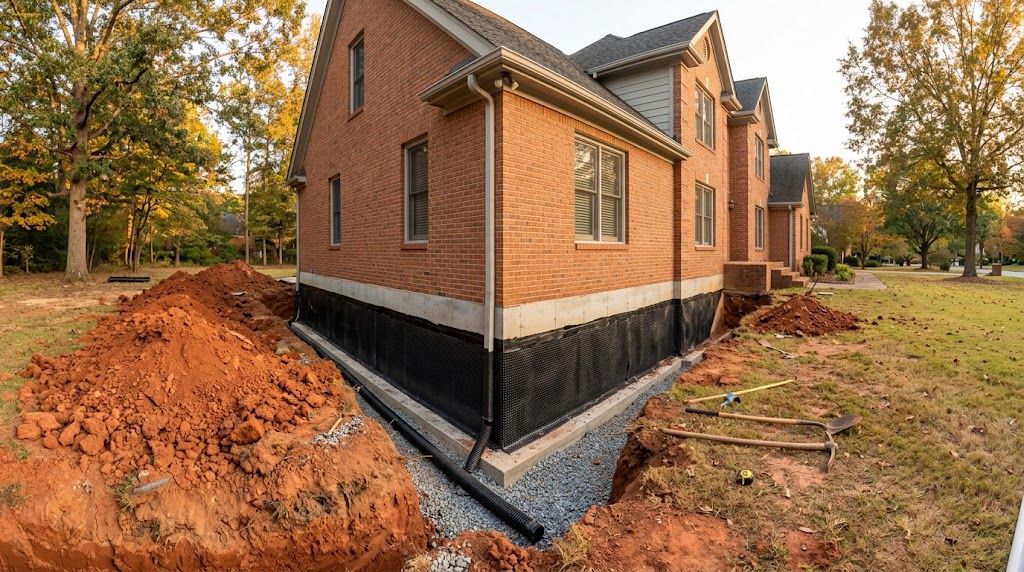
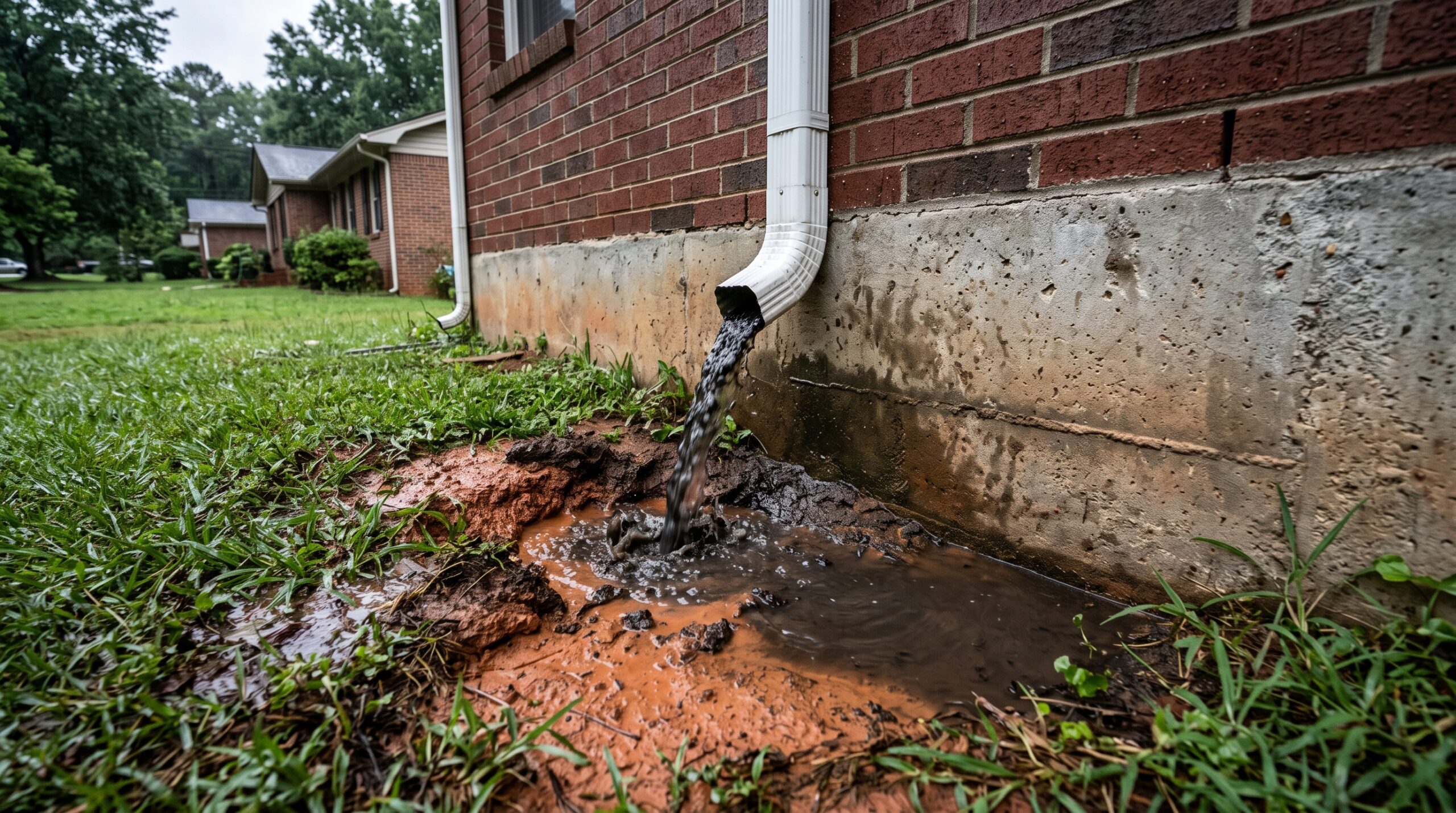
- Stop water from arriving. Roof runoff first, because it is the cheapest and largest single source. If downspouts discharge at the wall, start there: gutters, downspouts and foundation problems.
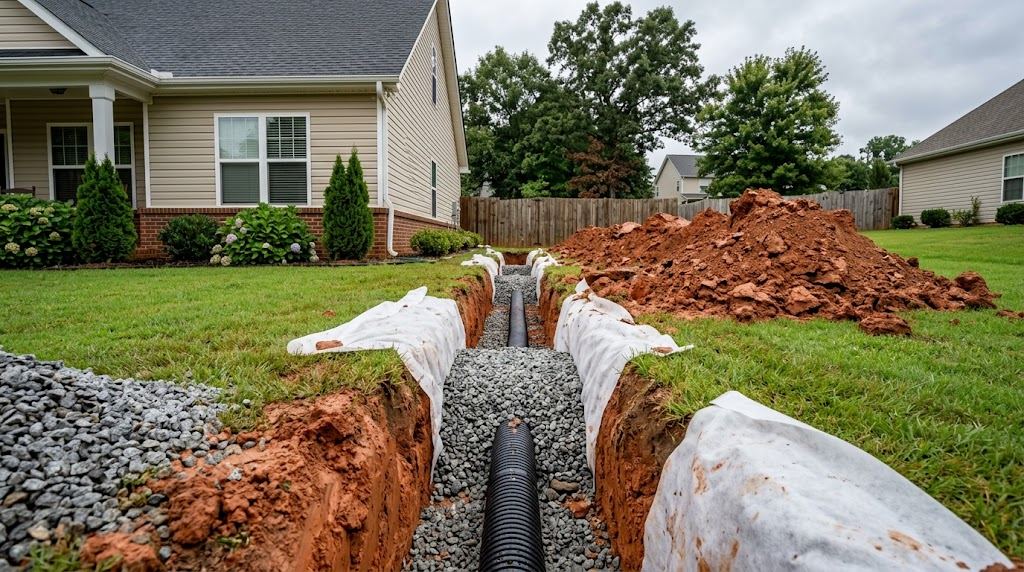
- Manage the water already in the soil. Grading and drainage, chosen for your grade and soil — we compared the options in French drain, regrading, or dry well.
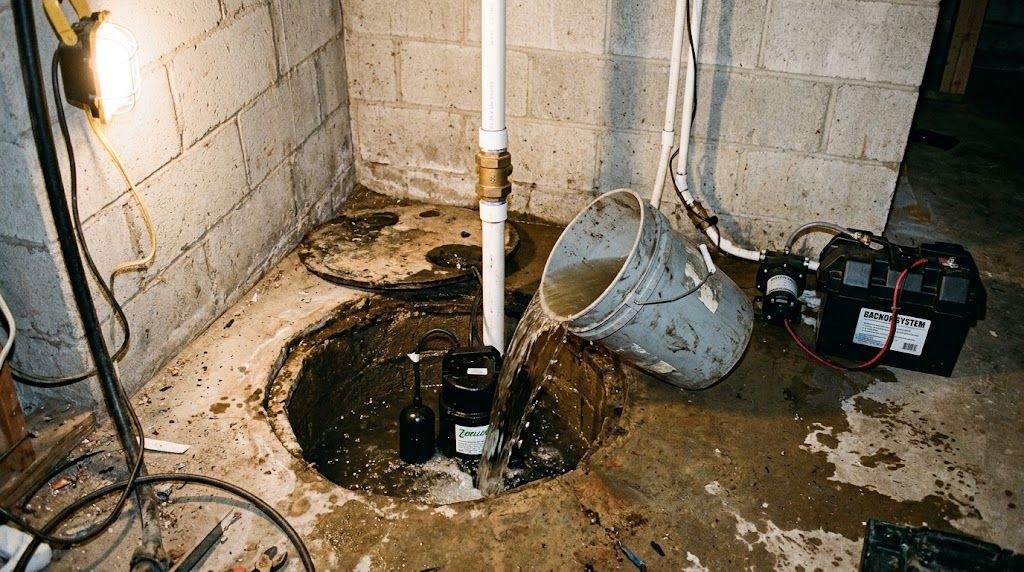
- Handle groundwater intrusion. Interior perimeter drainage and a sump, where the water table demands it.
- Then encapsulate, with a sealed liner and a real drying mechanism — dehumidification or conditioned air, as the code requires.
The Timing Argument
Georgia soil has been dry for most of this year, and a record-strength El Niño points toward a wetter than usual winter for the Southeast — we went through that outlook in what an El Niño winter in Georgia means for your basement.
Crawl spaces are where that shows up quietly. A basement announces a problem with water on the floor. A crawl space does it over a season, out of sight, in the moisture content of your floor framing. By the time the smell reaches the living room, the wood has been wet for months.
And to answer the question that always follows: standard homeowners insurance does not cover this. Gradual moisture damage and groundwater are excluded, which we broke down in does homeowners insurance cover basement water damage in Georgia?
Get It Looked At Before the Wet Season
The right answer for your house depends on what is actually happening under it — whether water is entering, how the ground is covered, and what the space would need to stay dry once it is closed.
CGS Waterproofing & Foundations does crawl space work across metro Atlanta, including Atlanta, Marietta, Alpharetta, Norcross and Athens, along with waterproofing and drainage throughout our service area.
Schedule an inspection and we will tell you whether your crawl space should be closed, what it would need to stay dry, and what has to be fixed before anything gets sealed.