If your yard holds water after every storm, you have probably been told three different things by three different people: install a French drain, regrade the yard, or put in a dry well. They are not interchangeable. Each one solves a different problem, and in Georgia clay, one of them frequently does not work at all.
Fixing yard drainage in Georgia has a wrinkle that generic advice written for other parts of the country misses: the clay. Here is how to tell which of the three you actually need — and one legal detail about where the water ends up that almost nobody mentions until it becomes a dispute.
Start With Grading, Because the Building Code Does
Before anyone sells you a drain, check the slope. The International Residential Code section on foundation drainage (R401.3) calls for the ground to fall at least 6 inches within the first 10 feet measured away from the foundation. Where a hard surface like a patio or driveway sits within 10 feet, the requirement is a minimum 2 percent slope away from the building.
That is a low bar, and a surprising number of Atlanta-area homes fail it — not because they were built wrong, but because soil settles, mulch beds get topped up year after year, and landscaping slowly builds the grade back toward the house.
How to check it yourself in twenty minutes: drive a stake at the foundation and another 10 feet out. Run a string between them and level it with a line level. Measure from the string down to the ground at the outer stake. If that gap is less than 6 inches, water is not leaving as fast as it should.
Regrading is the cheapest of the three fixes and it should almost always be the first one considered. If the slope is wrong, a drain is treating a symptom.
The code itself acknowledges the exception: where lot lines, walls, or steep terrain make proper grading impossible, drains or swales are the accepted alternative. That is the situation a French drain is genuinely for.
Do the Percolation Test Before You Buy a Dry Well
A dry well is a buried chamber, usually gravel-filled or a perforated plastic vault, that collects water and lets it soak into the surrounding soil. It works beautifully in sand. It is often the wrong product in Georgia.
Infiltration systems need soil that actually accepts water. Published design guidance for dry wells and infiltration trenches calls for a minimum infiltration rate of about 0.3 inches per hour, and advises against using them at all in soils above roughly 30 percent clay. Whether a metro Atlanta lot passes that test depends on the specific soil series, how much of the clay subsoil is exposed, and how compacted the ground was during construction. The USDA rates the dominant Cecil series as moderately permeable in its natural state, but a graded and compacted residential lot often behaves very differently, which is exactly why you test before you buy.
The same guidance sets separation distances that matter for a homeowner: a dry well should sit at least 10 feet from a building foundation (20 feet for an infiltration trench), at least 2 feet above the seasonally high water table, and 100 feet from a septic system or private well. A dry well installed too close to the house is not drainage — it is a reservoir of water parked next to your footing.
Test it before you commit. A rough percolation test is something you can do in a weekend: dig a hole 6 to 12 inches deep where the system would go, fill it with water repeatedly to saturate the surrounding soil (in clay this can take overnight), then fill it once more and time how long the water takes to drop. Divide the minutes by the inches it fell to get minutes per inch. Anything in the range of 61 to 120 minutes per inch or slower is poor drainage, and a dry well sized for that soil would have to be enormous to be useful.
If a contractor proposes a dry well without testing your soil first, ask why.
What a French Drain Actually Is — and How They Fail
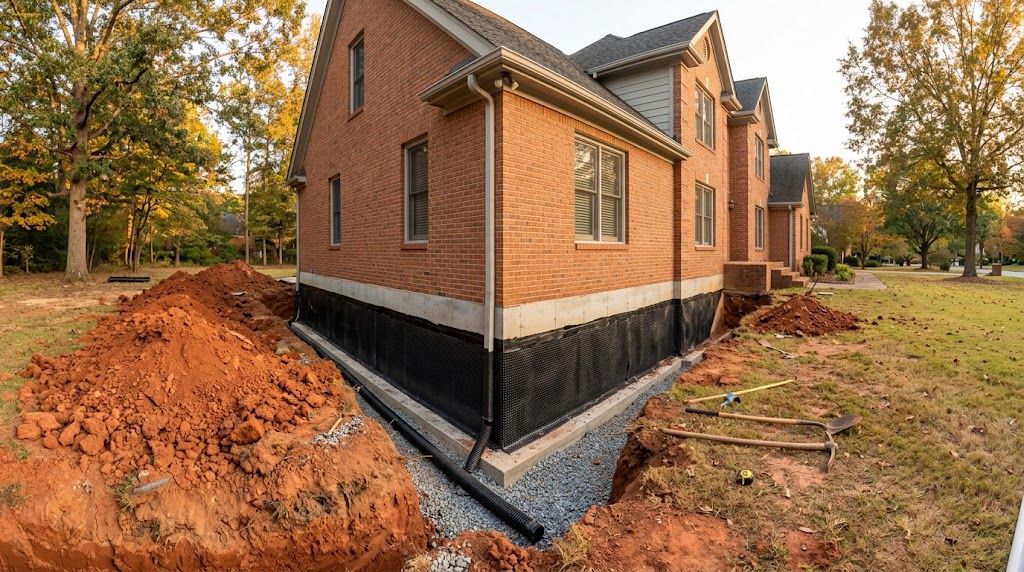
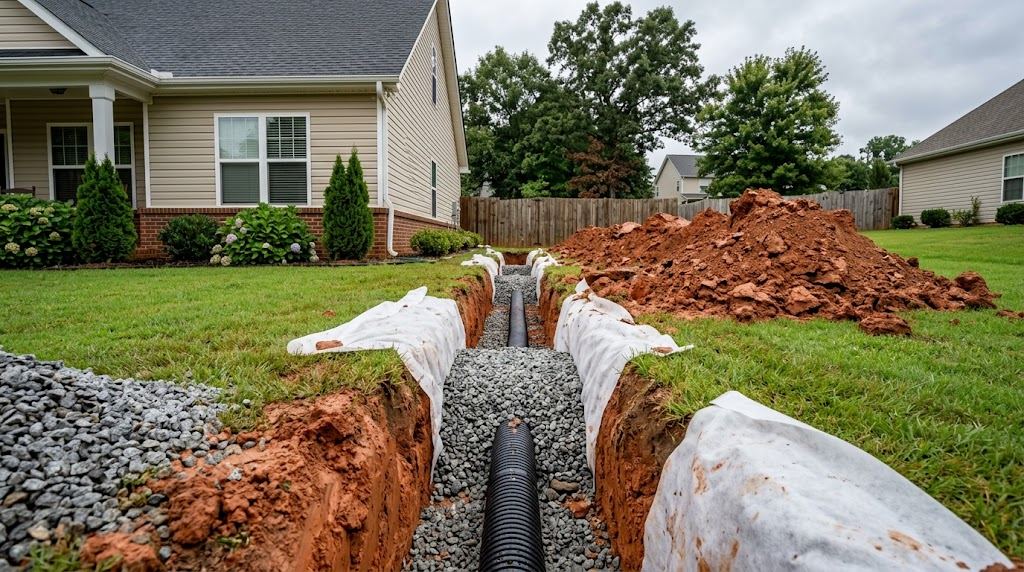
A French drain is a trench with a perforated pipe bedded in washed stone and wrapped in filter fabric, sloped so that collected water runs somewhere else by gravity. It does not make water disappear. It relocates it.
That distinction explains most of the failures we get called out to:
- No outlet. The trench collects water and delivers it to a low spot that also cannot drain. The system becomes an underground puddle.
- Not enough fall. Without consistent slope along the run, water sits in the pipe. Flat yards are exactly where this goes wrong.
- Wrong stone, or no fabric. Fine clay migrates into the aggregate and silts the system closed. It may work for two seasons and then quietly stop.
- Solving the wrong problem. An interior perimeter drain and a yard drain are different systems for different water. Installing one when you needed the other is expensive and disappointing.
Done properly, a French drain is the right answer when the grade cannot be corrected, when water arrives from uphill and has to be intercepted before it reaches the house, or when a specific low area needs to be captured.
The Question Everyone Skips: Where Does the Water Go?
This is where yard drainage stops being a landscaping question and becomes a legal one, and it is worth understanding before you install anything that ends in a pipe pointed at the property line.
Georgia follows what is known as the civil law rule for surface water. In plain terms: a lower property has to accept water that naturally flows down onto it from a higher one. The downhill neighbor cannot legally build a wall or berm that dams that natural flow back onto the uphill property.
But the rule cuts both ways, and this is the part that catches homeowners. The uphill owner may not artificially increase or concentrate the flow. Collecting runoff from your roof and yard into a single pipe and discharging that concentrated stream onto a downhill neighbor is a different thing from natural sheet flow — and in Georgia it has supported claims for trespass or nuisance.
Practically, that means a drainage plan needs a legitimate destination: a street or curb where local rules allow it, a storm drain connection, a daylight outlet onto your own property where the water can spread out rather than jet, or a detention or infiltration area sized for your soil. “Toward the back fence” is not a plan.
This is general information about how Georgia treats surface water, not legal advice. If a drainage change could affect a neighboring property, or if a neighbor’s water is affecting yours, talk to a Georgia real estate attorney before you dig.
So Which One Do You Need?
A rough decision path that holds up in most metro Atlanta yards:
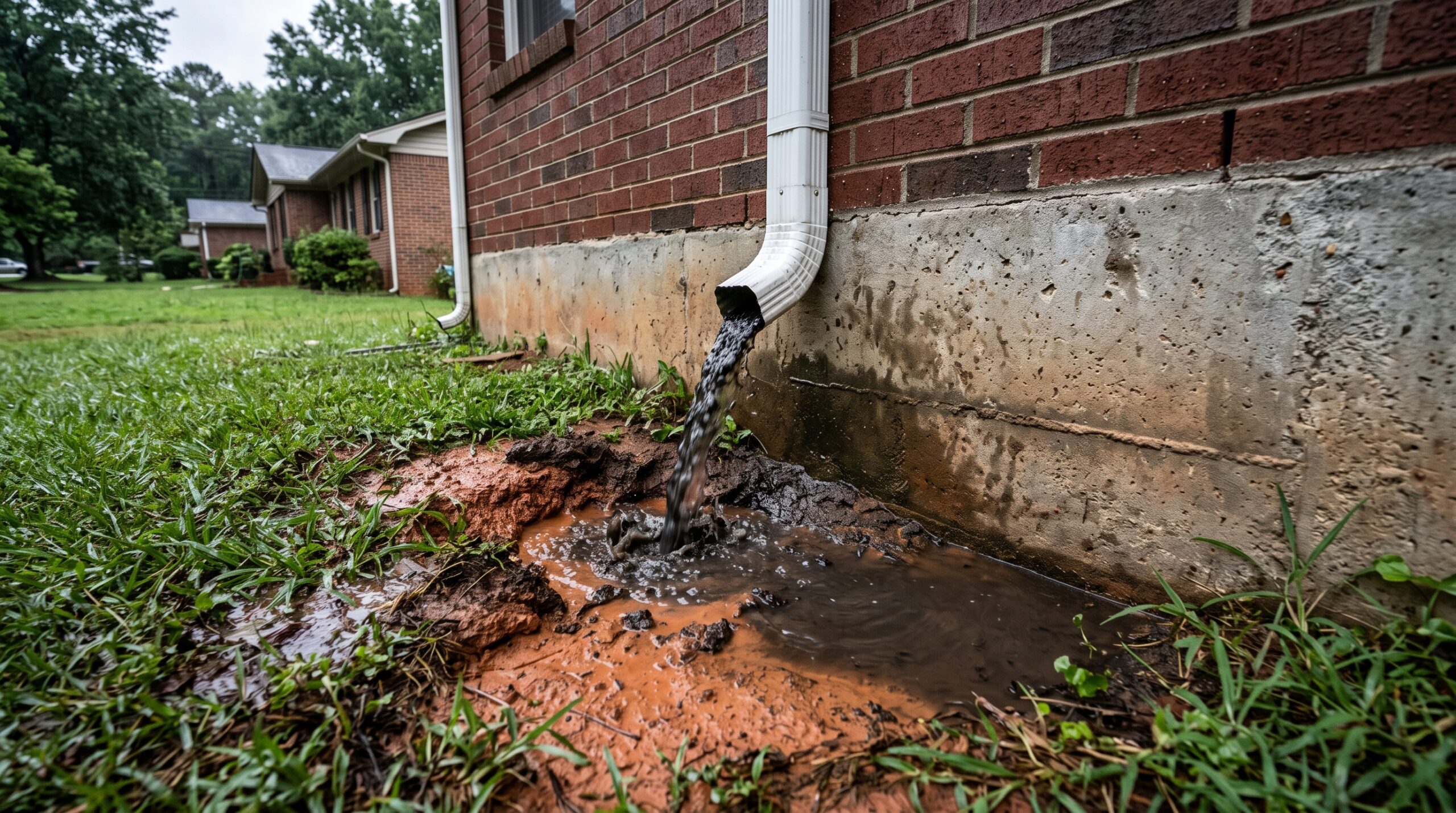
- Water pools against the house, and the ground is flat or slopes inward. Regrade first. Extend downspouts while you are at it — many “drainage problems” are just roof water discharged two feet from the foundation. If your gutters overflow every fall, gutters and guards are part of the same fix. Whether yours are actually sized for your roof is worth checking first: gutters, downspouts and foundation problems.
- Water arrives from an uphill neighbor or a slope you cannot regrade. Intercept it with a French drain or swale above the area you are protecting, and give it a lawful outlet.
- One persistent low spot, and your soil actually percolates. A dry well can work — after a perc test, and no closer than 10 feet to the foundation.
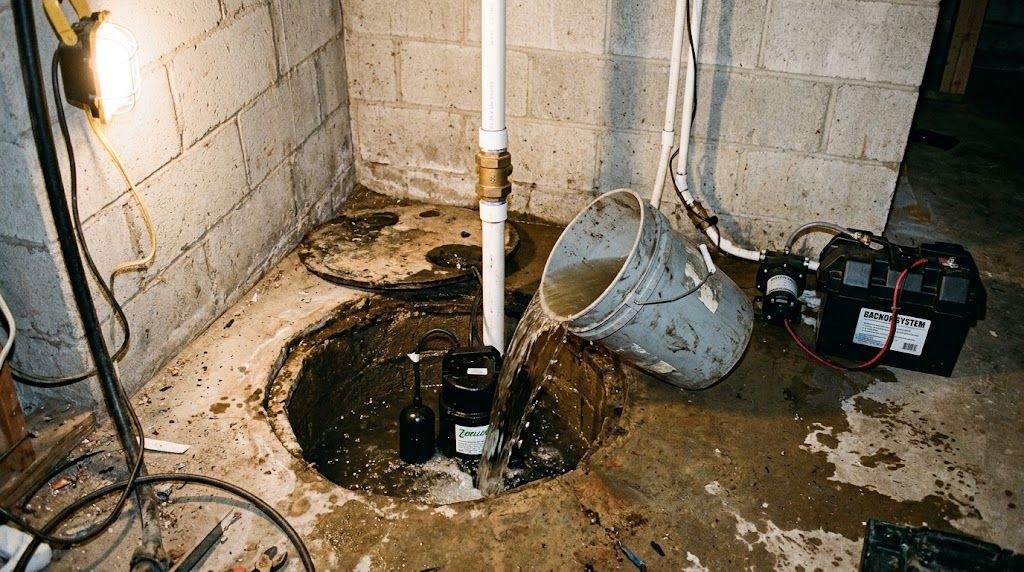
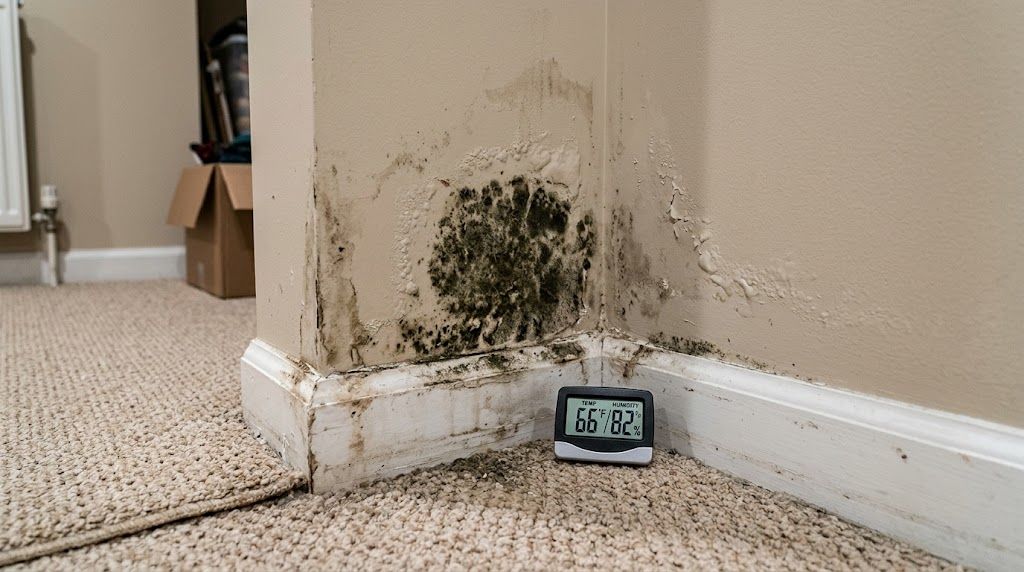
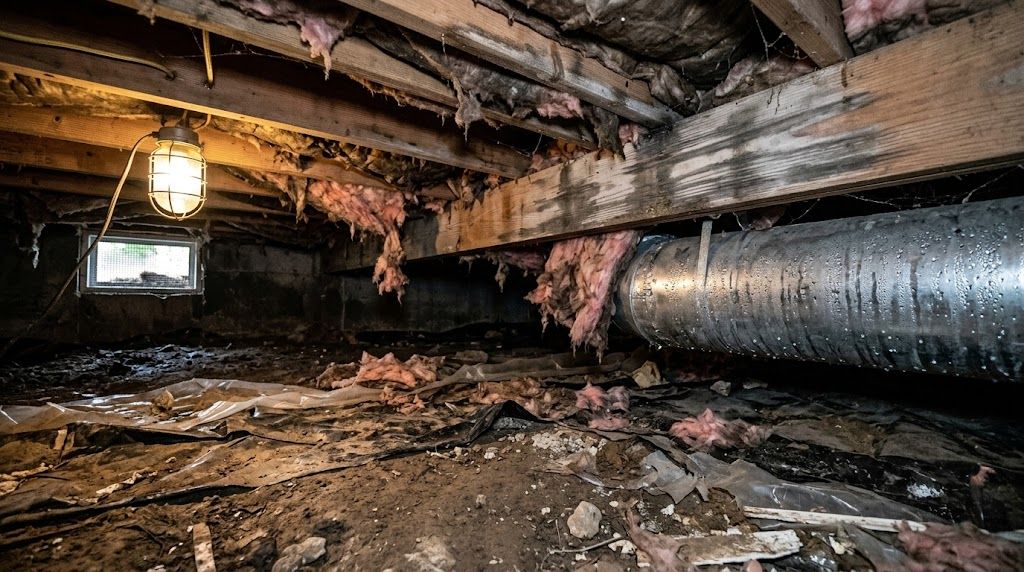
- Water is already inside the basement or crawl space. Yard drainage alone will not fix this. Water that has reached the interior is a waterproofing problem, usually needing interior perimeter drainage and a sump, and sometimes exterior work. Related symptoms show up as water coming up through the floor after rain.
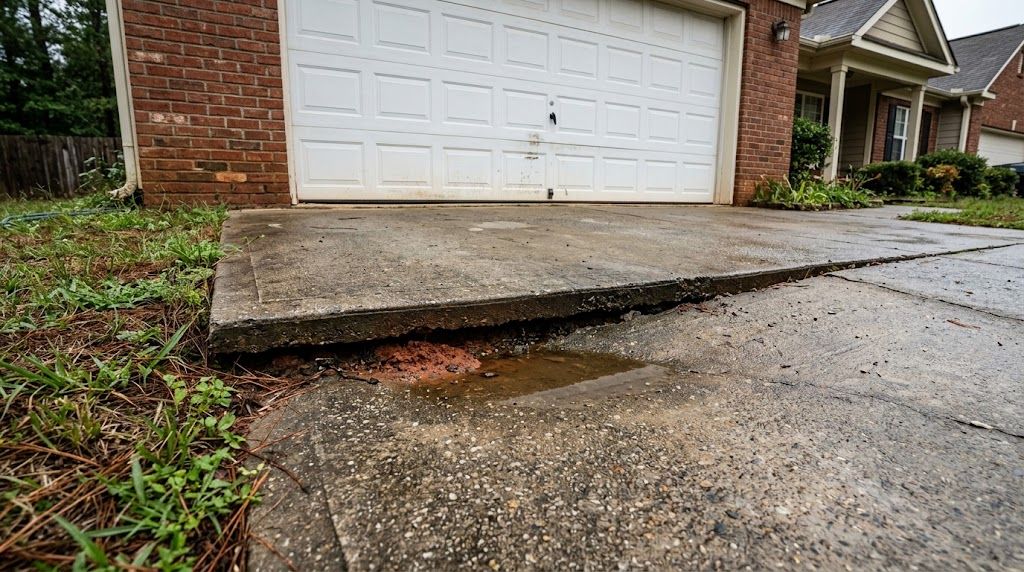
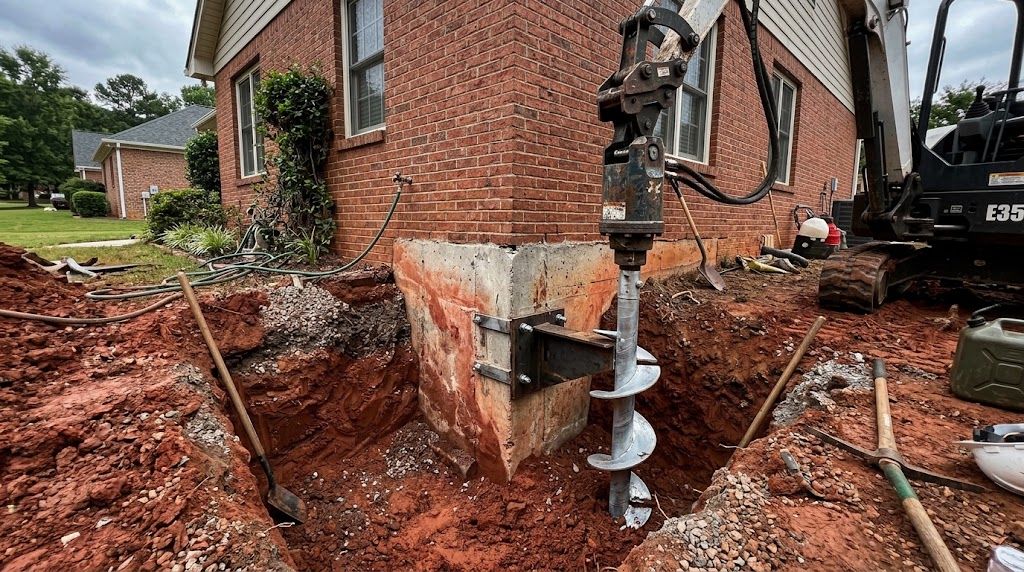
- You also have widening cracks, a sinking slab, or a wall that is bowing. Then drainage is only half the job and the other half is foundation repair. A sinking patio or sidewalk is frequently a drainage symptom that has already become a structural one.
In most cases the real answer is a combination — corrected grade, managed roof water, and a drain doing the one job grading cannot.
Why This Fall Specifically
Two reasons to move on this before winter rather than after.
First, the ground. Georgia soil has been dry for most of this year, which means the clay has shrunk and pulled back from foundations — the same mechanism behind soil pulling away from your foundation in dry weather. Those gaps are open channels for the first heavy rains. And with a record-strength El Niño pointing a likely wet pattern at the Southeast this winter, the timing is not ideal. We covered that outlook in detail in what an El Niño winter in Georgia means for your basement.
Second, the practical reality: trenching and grading are straightforward in dry ground and miserable in saturated ground. Fall work is cheaper, faster, and actually schedulable. Once a wet pattern sets in, every drainage contractor in the metro is booked.
And if you are assuming your policy would cover the damage if this goes wrong — it very likely would not. Groundwater seepage is excluded from standard homeowners coverage, which we broke down in does homeowners insurance cover basement water damage in Georgia?
Yard Drainage in Georgia: Diagnose the Water Before You Buy a Solution
The most expensive drainage mistake is installing the right system in the wrong place. Grade, soil type, where the water originates, and where it can lawfully go all have to be established first.
CGS Waterproofing & Foundations handles drainage, waterproofing, crawl space, and foundation work across metro Atlanta, including Atlanta, Marietta, Alpharetta, Norcross, and Athens, plus the rest of our service area.
Schedule an inspection and we will tell you where your water is coming from, where it can legally go, and which of the three fixes your yard actually needs.