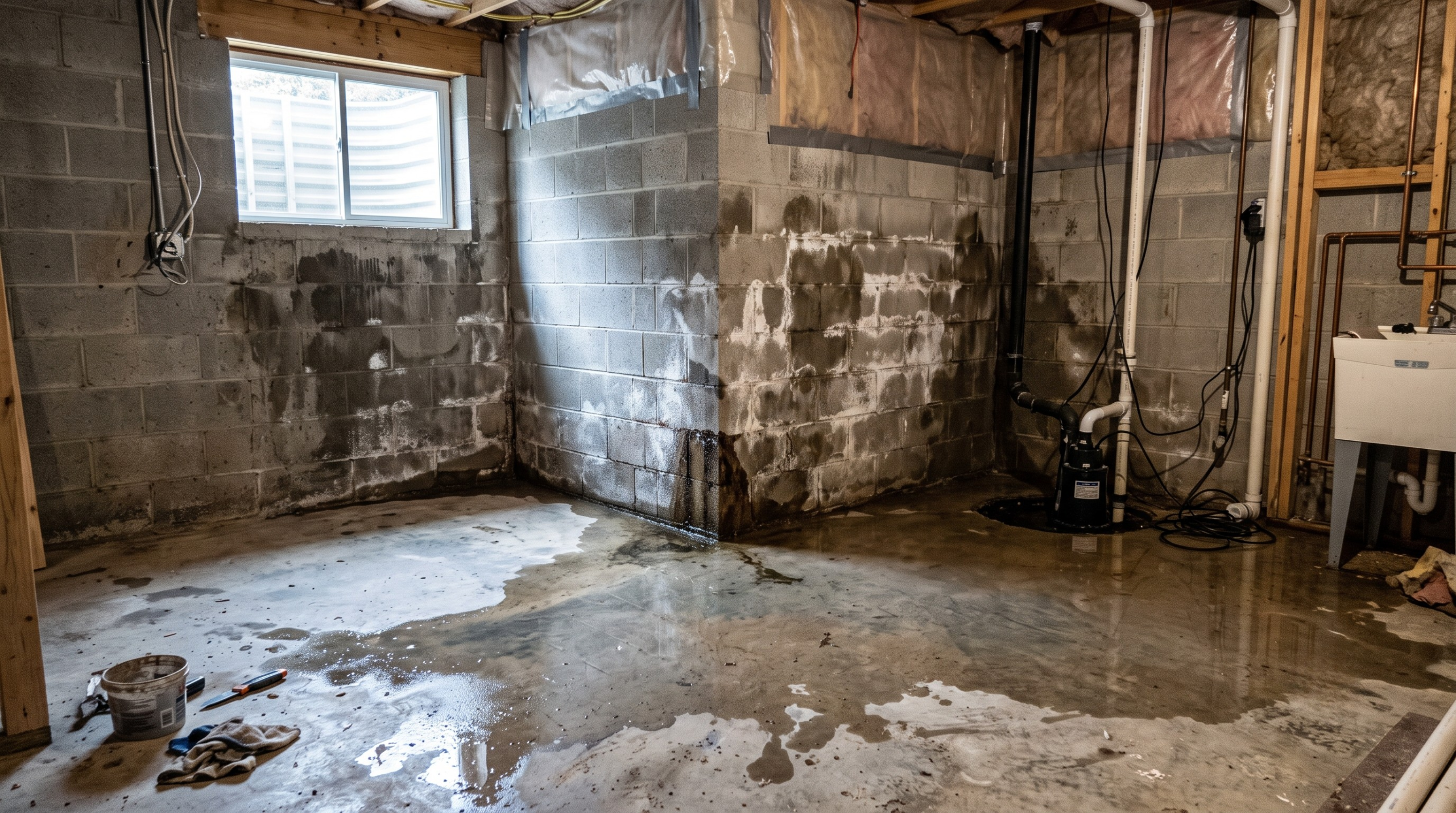
If you have water in your basement and you are hoping your homeowners policy will pay for it, here is the short answer: a standard Georgia homeowners policy covers water damage that is sudden and accidental, and excludes water damage that seeps in gradually from the ground. Most basement water problems in metro Atlanta fall into the second category — which is exactly why so many homeowners are surprised when a claim is denied.
Below is a plain-English breakdown of what your policy actually does and does not pay for, what the coverage gap looks like in dollars, and what you can do about it.
The One Distinction That Decides Every Claim
Insurance adjusters are not really asking “is there water damage?” They are asking a narrower question: where did the water come from, and how fast did it get there?
- Sudden and accidental — a pipe bursts, a water heater lets go, a washing machine hose fails. Generally covered.
- Gradual or from the ground up — groundwater pushing through a foundation wall, hydrostatic pressure at the floor-wall joint, a slow leak nobody noticed. Generally excluded.
Everything else in this article is a variation on that single line.
Scenario 1: A Pipe Bursts — Usually Covered
A supply line splits during a January cold snap and floods the finished basement. This is the textbook covered loss. Your policy typically pays to repair or replace what the water damaged, up to your coverage limit and minus your deductible.
One important limit: the policy pays for the damage the water caused, not usually for the failed pipe itself. Repairing the plumbing is generally on you.
Scenario 2: Groundwater Seepage — Almost Never Covered
This is the one that catches Georgia homeowners, and it is the most common basement water problem in the state.
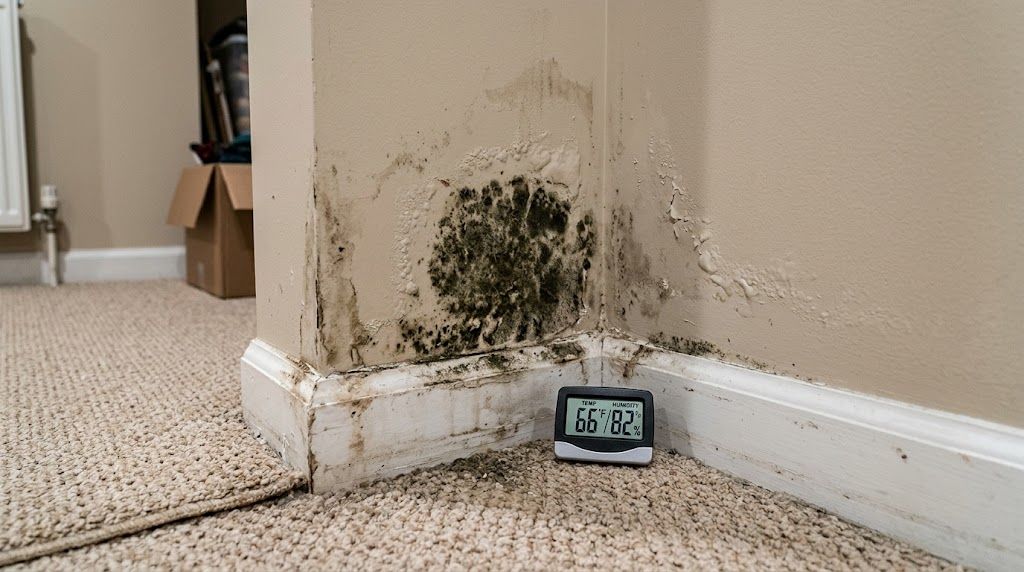
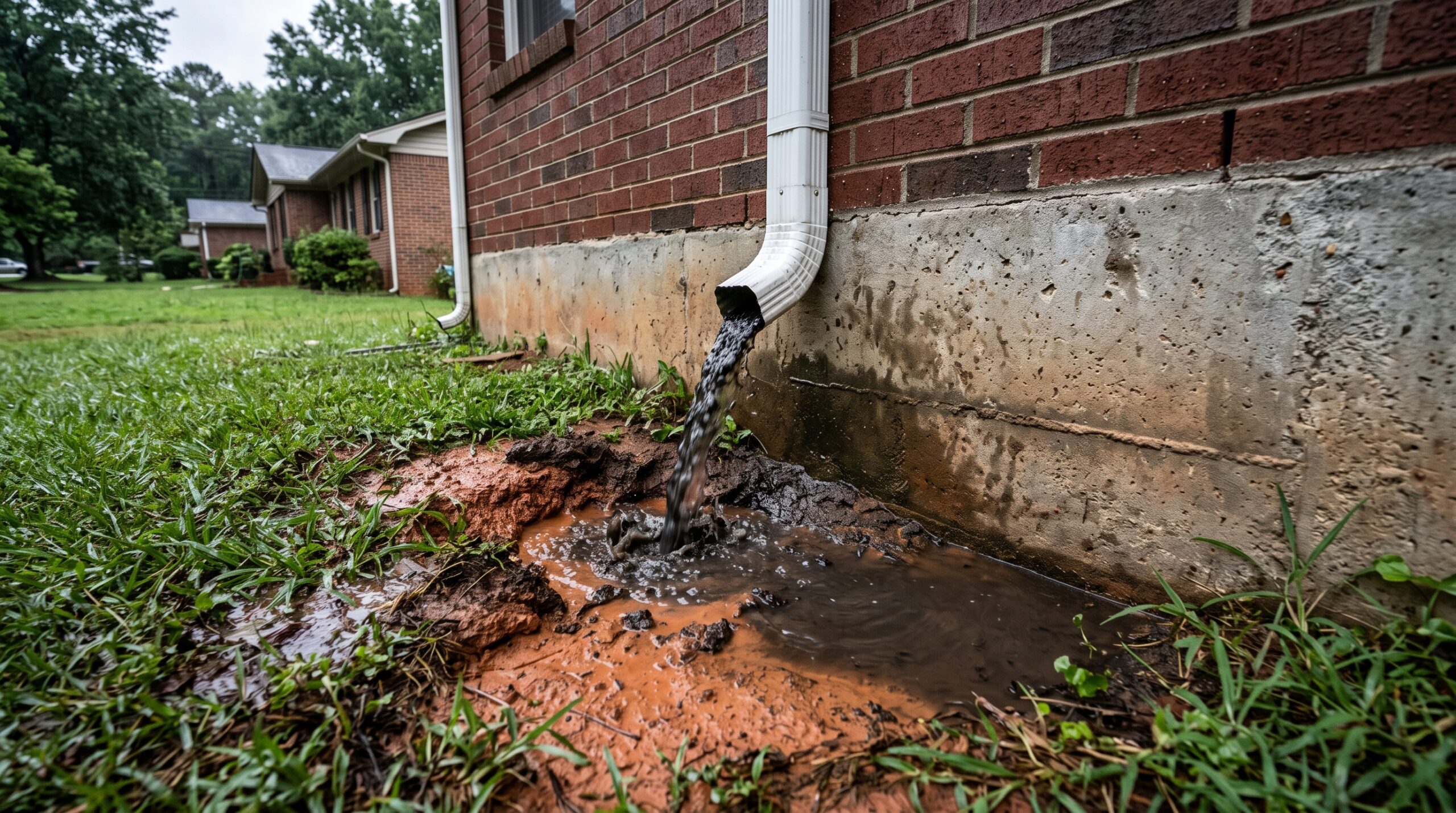
When rain saturates the soil around your foundation, that water has weight. The pressure it exerts against your basement walls and floor is called hydrostatic pressure, and it will find any crack, cold joint, or porous spot it can. The result is water coming up through the floor after rain, damp walls, or a persistent musty smell.
Standard homeowners policies exclude this. It is classified as a maintenance issue rather than a sudden accident — the reasoning being that the condition developed over time and was, in the insurer’s view, preventable. Damage from surface water, groundwater, and water below the surface of the ground is written out of the policy explicitly.
The same logic applies to foundation cracks that let water through and to settlement caused by soil movement. Earth movement is a separate exclusion in most policies.
Scenario 3: Flooding From Storms — You Need a Separate Policy
Heavy rain, flash flooding, and creek overflow are not covered by homeowners insurance at all. That requires flood insurance, generally through the National Flood Insurance Program (NFIP) or a private flood insurer.
And here is the part almost nobody knows until they file a claim: even with flood insurance, basement coverage is sharply limited.
According to FEMA’s own guidance on basement coverage, an NFIP policy covers building items in a basement such as:
- Furnaces, water heaters, and central air conditioners
- Sump pumps and well water systems
- Electrical outlets, switches, junction boxes, and circuit breaker panels
- Unfinished, untaped drywall
- Stairways attached to the building, and foundation elements
- Fuel tanks and the fuel in them
- Floodwater pumping, mold treatment, and structural drying
What an NFIP policy does not cover in a basement:
- Furniture, electronics, and household belongings
- Finished flooring and finished walls
- Bathroom fixtures and built-in items
- Carpet removal
- Generators and standalone dehumidifiers
Translated: if you have a finished basement, flood insurance will likely pay to replace the furnace and dry out the structure, and will not pay for the drywall, the flooring, or anything you own that was sitting down there. Note also that NFIP policies typically carry a 30-day waiting period — you cannot buy one with a storm already in the forecast.
Scenario 4: Sewer Backup or Sump Pump Failure — Only If You Bought the Add-On
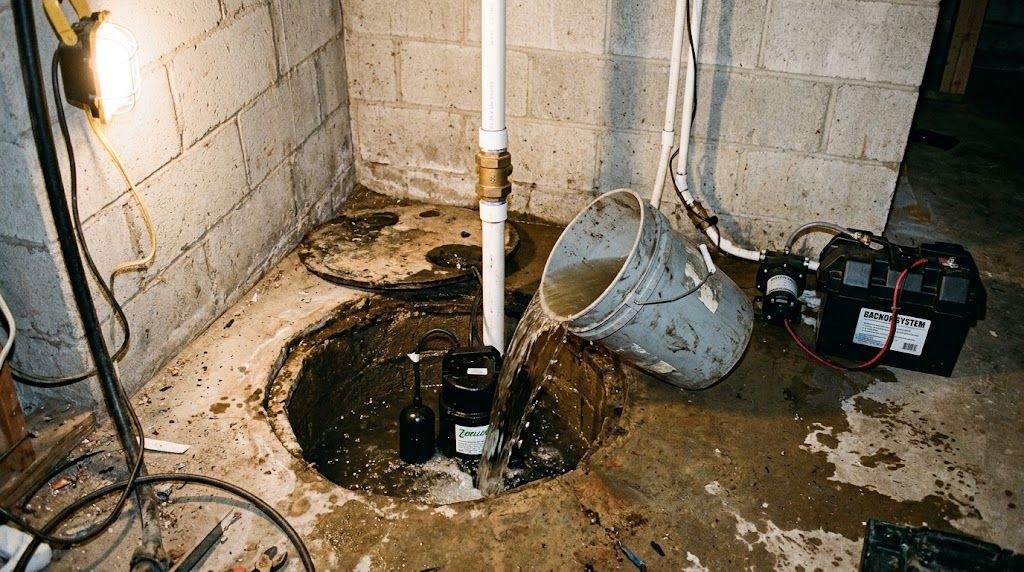
If a clogged sewer line backs up into your basement, or your sump pump quits during a downpour and the pit overflows, a standard policy does not cover it either.
What covers it is an optional endorsement, usually sold as water backup and sump pump overflow coverage. It typically runs somewhere in the range of $50 to $250 per year, with limits that commonly start around $5,000 and can be raised considerably. Many policies also extend it to mold damage resulting from the backup.
If you have a sump pump and no backup endorsement, that is a gap worth a five-minute phone call to your agent. Ask specifically whether pump failure is covered, not just sewer backup — some endorsements treat them differently.
The 14-Day Trap
Many standard policy forms contain an exclusion for constant or repeated seepage or leakage occurring over a period of 14 days or more. It is a heavily litigated clause, and insurers use it regularly to deny claims on slow leaks.
The practical takeaway is uncomfortable but useful: a leak you have been living with for a month is a much weaker claim than the same leak reported the week it started. If you notice water, document it with dated photos and report it promptly, even if you are not sure it will be covered. Waiting rarely helps and often hurts.
Why Georgia Homeowners Land in the Excluded Column So Often
Metro Atlanta sits on red clay. Clay expands when it gets wet and shrinks when it dries out, and Georgia gives it plenty of chances to do both — dry stretches in late summer followed by heavy thunderstorms, then a wet winter.
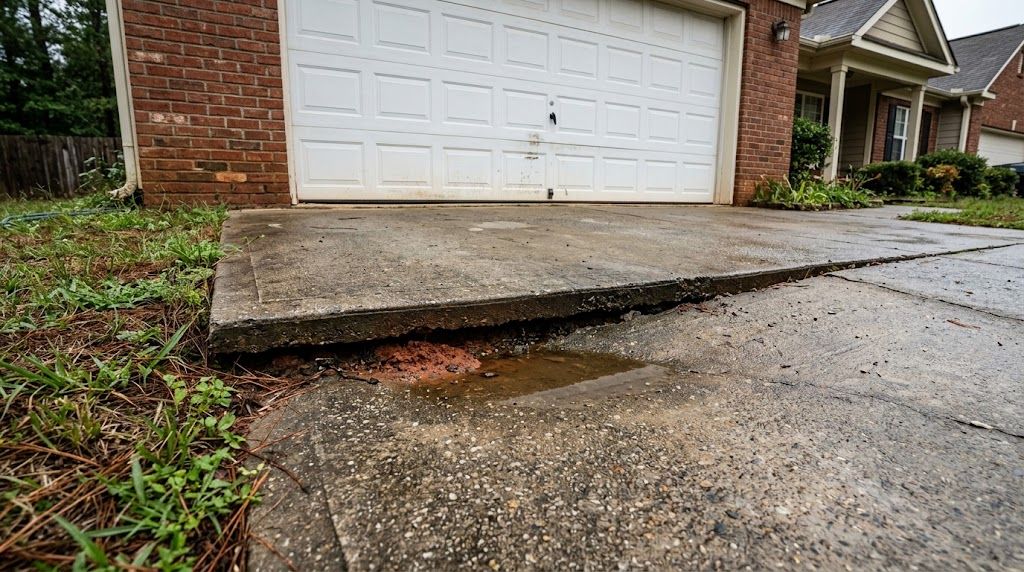
That cycle does two things. It opens gaps between the soil and your foundation wall, giving water a direct path down to the footing. And it puts repeated mechanical stress on the foundation itself, which is what turns a hairline crack into a leaking one.
The water that results is, by definition, groundwater arriving gradually. It is the single most common basement water problem in the region, and it is the one your insurance policy is written specifically to avoid paying for.
That is worth sitting with for a moment. The most likely way your basement gets wet in Georgia is the one scenario nobody insures.
That risk is not constant from year to year. Heading into the 2026–27 winter it is elevated, because a record-strength El Niño is pointing a wet pattern at a state whose soil has been dry all year. We broke down what that means here: what an El Niño winter in Georgia means for your basement.
What To Do About the Gap
Since the exposure cannot be insured away, it has to be engineered away. In rough order of cost:
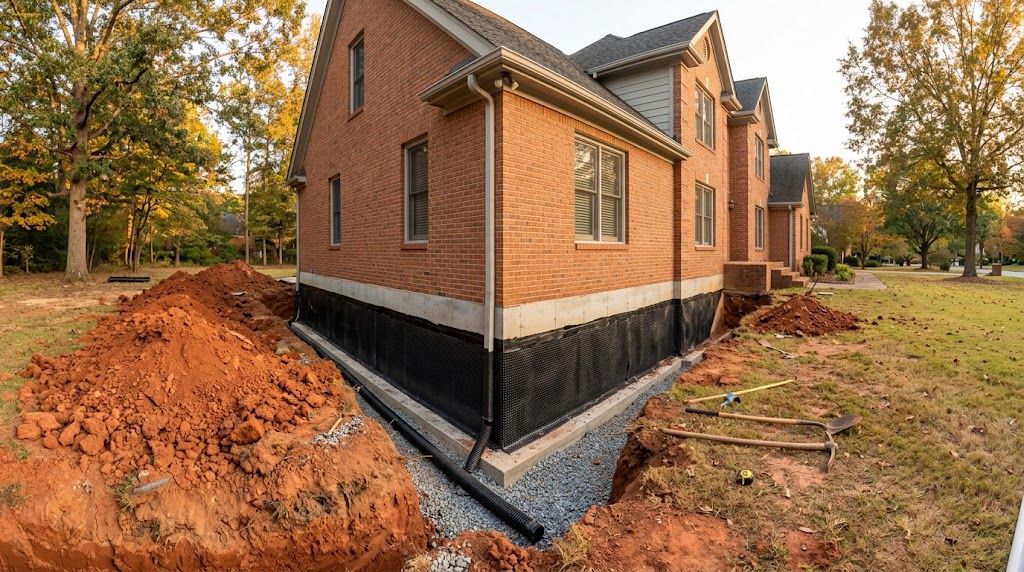
- Fix the water that never should have reached the foundation. Extend downspouts well away from the house, clear gutters, and correct any grading that slopes toward the foundation instead of away from it. This is the cheapest fix and it solves a meaningful share of cases.
- Address the water already in the soil. Exterior and interior drainage systems — French drains, footing drains, properly sized sump systems — give groundwater somewhere to go besides your basement. If you are not sure which option your yard needs, we compared them in French drain, regrading, or dry well.
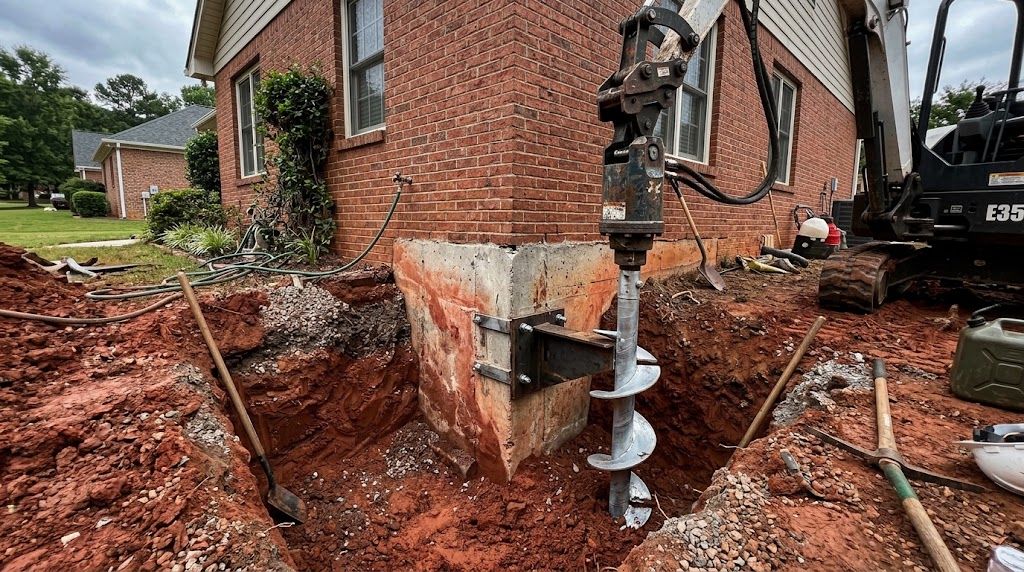
- Seal the building envelope. Professional basement waterproofing addresses the wall and floor assembly itself, including the cold joint where most seepage actually enters.
- Deal with structural causes. If cracks are widening or walls are bowing, drainage alone will not hold. That is a foundation repair question.
And do call your agent about the water backup endorsement. It is inexpensive and it closes one of the four gaps outright.
Before You File a Claim
If you have water in the basement right now:
- Photograph everything before you clean up, with timestamps.
- Write down when you first noticed it — you will be asked.
- Stop the source if you safely can, and keep receipts for anything you spend on emergency mitigation. Most policies require you to take reasonable steps to prevent further damage.
- Report it promptly rather than waiting to see if it dries out.
- Read your declarations page for the words “water backup,” “sump,” and “flood” before you call. Knowing what you actually bought changes the conversation.
Get the Cause Diagnosed, Not Just the Water Removed
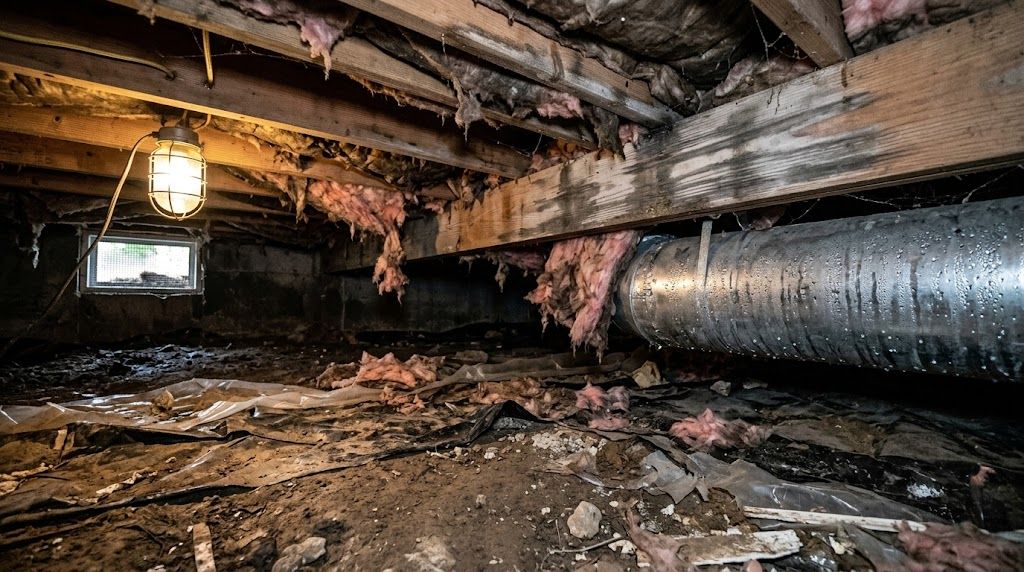
Drying a basement is not the same as fixing one. If the water came in through the walls or floor, it will come back with the next heavy rain — and your policy will not be there for that one either.
CGS Waterproofing & Foundations has been diagnosing and solving basement water problems across metro Atlanta for years. We provide basement waterproofing in Atlanta, Marietta, Alpharetta, Norcross, and Athens, along with crawlspace, drainage, and foundation work throughout our service area.
Contact us for an inspection and we will tell you where the water is actually getting in — and what it will take to stop it.
This article is general information for Georgia homeowners, not insurance advice. Coverage varies by carrier, policy form, and endorsement. Always read your own declarations page and speak with your licensed insurance agent about your specific policy.