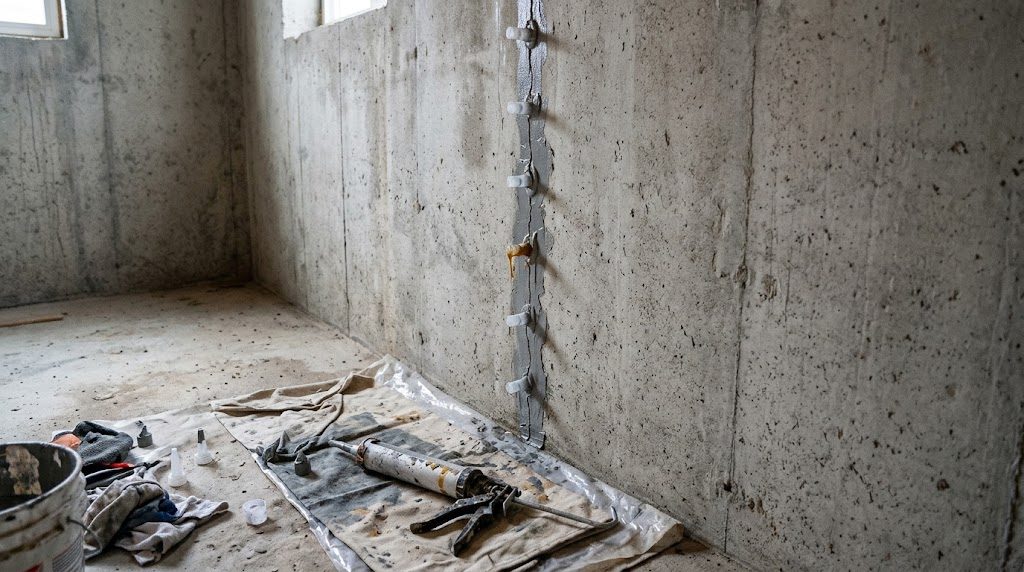
Epoxy vs. polyurethane crack injection sounds like a question for contractors, but it decides whether the crack in your basement wall stays fixed. Both are injected into the crack the same way, through small ports glued along its length. They do opposite jobs. Epoxy glues the concrete back together. Polyurethane seals the crack against water and stays flexible. Pick the wrong one and the wall either leaks again or keeps a structural problem hidden behind a neat-looking repair.
Here is how each one works, which cracks each one is for, and when neither is the right answer.
First, Find Out What Kind of Crack It Is
Every credible repair guide starts in the same place: figure out why the wall cracked before choosing a material. The American Concrete Institute’s repair guidance on epoxy injection (RAP 1) says the cause and the need for repair must be determined first, and lists common causes such as drying shrinkage, thermal movement and settlement. The U.S. General Services Administration’s procedure for injecting epoxy into concrete cracks warns that “superficial repairs can aggravate the problem.”
For a homeowner, the useful split is this:
- Dormant cracks have stopped moving. Thin vertical cracks in poured concrete walls are often shrinkage cracks from the concrete curing. They may never grow, but they can still let water in.
- Active cracks are still opening, closing or shifting. Horizontal cracks, cracks wider at one end than the other, and cracks where one side has pushed out past the other are signs of movement that needs a structural look.
A simple check: mark both ends of the crack with a pencil and the date, and measure its width. If it is longer or wider a few months later, it is active.
Epoxy vs. Polyurethane Crack Injection: How They Differ
Epoxy is a rigid structural adhesive. ACI’s RAP 1 describes its purpose as restoring structural integrity and resisting moisture penetration, and it can be used on cracks as fine as about 0.002 inch. It cures slowly, over hours, which lets it soak deep into hairline cracks, and once hard it can be as strong as the concrete around it. ACI recommends a moisture-tolerant epoxy where the crack is wet.
Polyurethane is a flexible sealant. It foams and expands within minutes, filling the crack and the voids behind it. According to ConcreteNetwork’s overview of basement crack injection, it adds little strength but can tolerate slight movement in the wall, and it is usually the better choice for a crack that is actively leaking.
Side by side:
- Goal: epoxy rebonds the wall; polyurethane stops water.
- Movement: epoxy is rigid, so a crack that keeps moving will crack again next to the repair; polyurethane flexes with small movement.
- Wet or leaking cracks: epoxy needs a dry or merely damp crack and a moisture-tolerant formula; polyurethane is the usual choice for a crack that is actively leaking.
- Cure time: epoxy takes hours; polyurethane foams in minutes.
- Voids behind the wall: slow-curing epoxy can run out the back of the crack into gaps in the soil; expanding polyurethane fills them.
Which One Does Your Crack Need?
Choosing between epoxy vs. polyurethane crack injection comes down to what the crack is doing and what you need the repair to do:
- A thin vertical crack that leaks in heavy rain: polyurethane. The goal is waterproofing, not strength.
- A dormant crack that an engineer says needs its strength restored: epoxy. The GSA procedure is explicit that epoxy injection is for dormant cracks.
- A crack that is still moving, a horizontal crack, or a wall that bows: neither yet. Injecting a moving crack only hides it. The movement has to be stopped first with foundation repair, and the crack can be sealed afterward.
- A crack that leaks and also needs strength: this is a judgment call for the contractor or engineer, often solved by stopping the water first and evaluating the structure separately.
When Crack Injection Is the Wrong Fix
Injection works on poured concrete walls. It is not the answer for every wet basement:
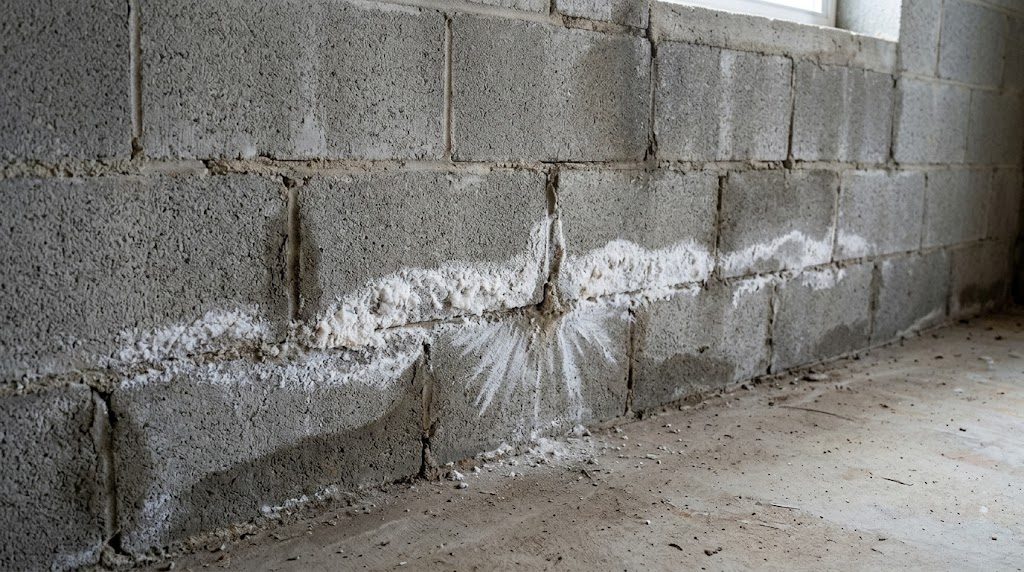
- Concrete block walls. Block is hollow. Water that gets into the cores travels inside the wall and comes out somewhere else, so sealing one crack rarely solves the leak. ConcreteNetwork notes that masonry block walls are not suitable for this kind of injection.
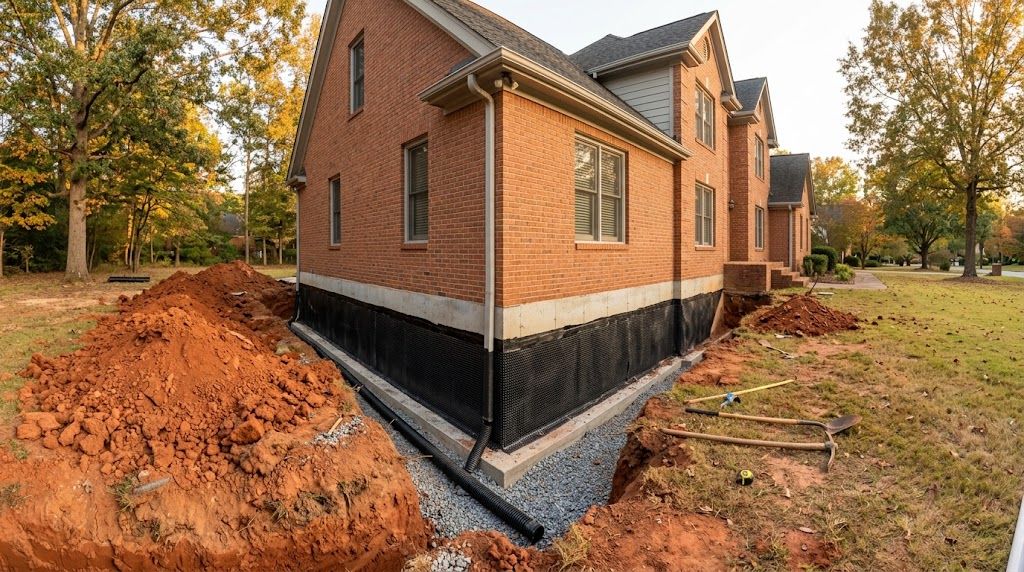
- Water at the joint where the wall meets the floor. That joint is not a crack, and the water usually comes from pressure building in the soil at the footing, below the slab. It calls for drainage, as we covered in interior vs. exterior basement waterproofing.
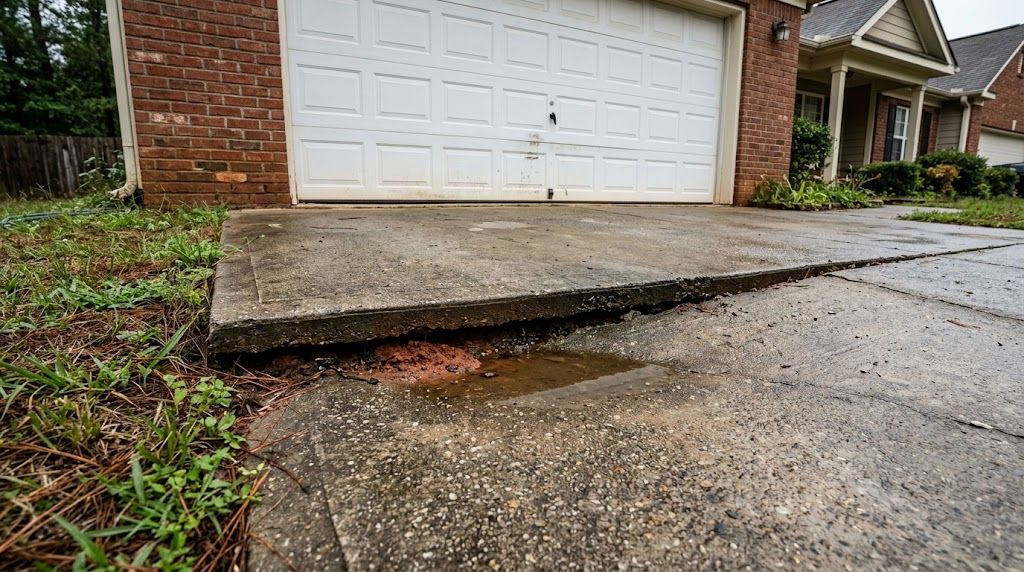
- A foundation that is still settling. Seal it now and the crack reopens. Stabilize first, then seal.
- Dampness across the whole wall. A wall that is wet everywhere, or covered in white mineral deposits, has a water management problem, not a crack problem. We explained how to read those deposits in white powder on basement walls.
Skip the Hardware-Store Shortcut
DIY kits exist for both materials, and on a dormant hairline crack in a poured wall they can work. The common failures are predictable: injecting a crack that is still moving, using epoxy on a crack that is actively leaking, or sealing the inside face of a crack while water keeps running behind it. If the crack is horizontal, wider than about a quarter inch, or offset, do not seal it yourself. Have it looked at first, because a sealed crack is harder to read later.
Also check the outside before blaming the crack. Gutters that overflow and downspouts that dump at the foundation load the soil against the exact wall that is leaking. We covered that in do gutters cause foundation problems?
Get the Crack Diagnosed Before It Is Sealed
CGS Waterproofing & Foundations repairs leaking basement wall cracks as part of basement waterproofing, and evaluates cracks that point to movement through our foundation repair team. We work across metro Atlanta, including Atlanta, Marietta, Alpharetta, Norcross and Athens. Full service area here.
Schedule a free inspection and we will tell you whether your crack needs epoxy, polyurethane, or a fix that starts somewhere other than the crack.