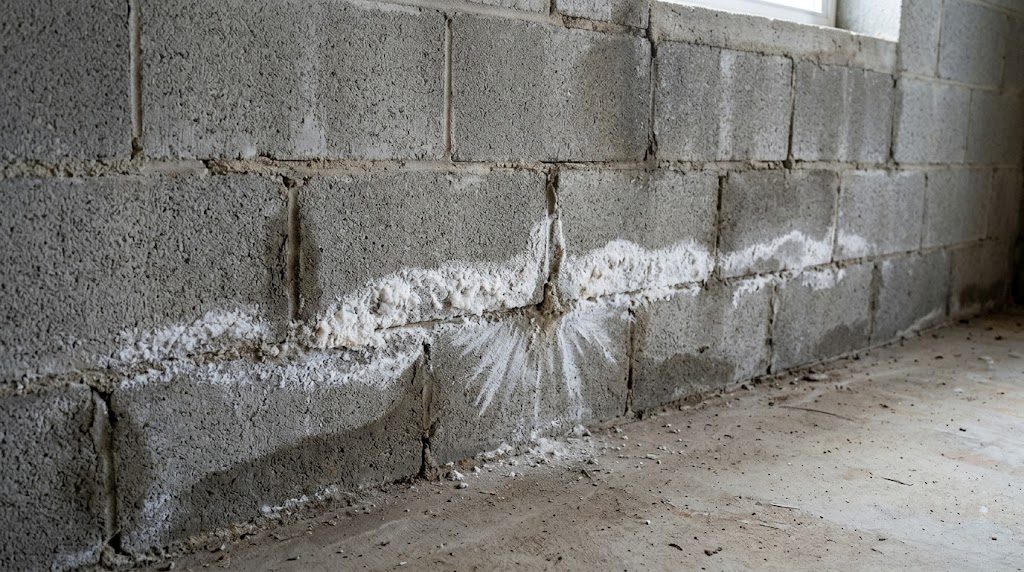
White powder on basement walls tends to show up as the weather cools, and it is one of the most misread signs in a basement. Some people panic and assume it is mold. Others brush it off and forget about it. Most of the time it is neither dangerous nor meaningless: it is efflorescence, a crust of mineral salts, and it is the wall telling you that water is moving through it.
Here is how to tell efflorescence from mold in a few minutes, what the pattern on the wall says about where the water comes from, and why the powder is the least important part of the problem.
What Efflorescence Is
Efflorescence is a white, crystalline deposit of water-soluble salts. According to the Brick Industry Association’s Technical Note 23A, it takes three things at once:
- Soluble salts in or touching the wall. Portland cement in concrete and mortar is a main source, and soil and groundwater add more.
- Water in contact with those salts long enough to dissolve them.
- A path to a surface where the water can evaporate and leave the salts behind.
Take away any one of the three and the powder stops forming. In a basement, the salts are always there and the inside face of the wall is always a place to evaporate. The variable is the water. That is why efflorescence is such a reliable moisture indicator: no water moving through the wall, no white powder.
Poured concrete and concrete block walls are especially prone to it. The same BIA note points out that concrete and concrete masonry units can contain several times more soluble material than clay brick.
White Powder on Basement Walls: Efflorescence or Mold?
The two can look alike from a few feet away, especially white mold. Up close, they behave very differently:
- Where it grows. Efflorescence only forms on masonry: concrete, block, brick, mortar. Mold needs something organic. The EPA notes that mold can grow on virtually any organic material when moisture is present, so it shows up on wood framing, drywall paper, cardboard boxes, carpet, and the dust and grime sitting on a wall. If the same growth is spreading onto the wood sill plate or the stored boxes, it is not efflorescence.
- Texture. Pinch it. Efflorescence is crystalline and crumbles into a dry, chalky or gritty powder. Mold is fuzzy, cottony or slimy and smears.
- Color. Efflorescence stays white or off-white. Mold can start white and turn gray, green, blue or black, and often shows mixed colors.
- Water. Most efflorescing salts are water-soluble, per BIA. Mist a small spot: efflorescence tends to darken and dissolve. Mold does not dissolve.
- Smell. Efflorescence has no odor. A musty, earthy smell points to mold somewhere nearby, even if it is not the white patch you are looking at.
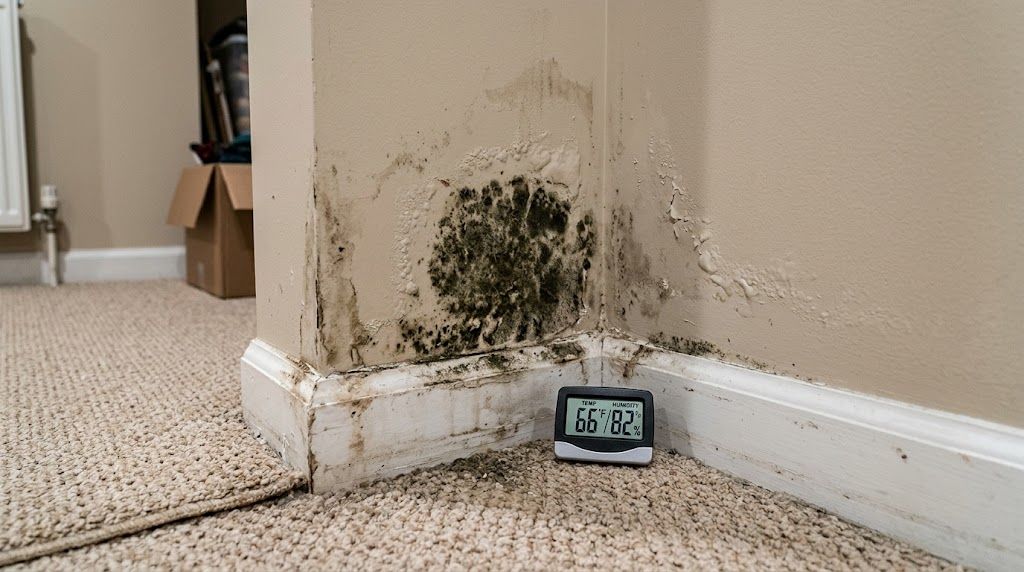
One caution: the two are not mutually exclusive. A wall wet enough to grow salt crystals is wet enough to grow mold on anything organic touching it. Finding efflorescence on the concrete does not clear the framing, the carpet or the boxes against that wall. If you are not sure, a professional mold inspection settles it, and we covered what the EPA actually recommends in mold in your Georgia basement.
What the Pattern Tells You
Where the powder appears is often more useful than what it is:
- A house less than a year old with an even haze: BIA calls this “new building bloom.” It comes from the water used during construction drying out, and it usually fades on its own.
- Efflorescence after the first year: BIA says it usually points to excess water penetration or poor drainage, and that it is often worst in winter and cold weather, which is why it so often appears as Georgia heads into the colder months.
- A horizontal band low on the wall: water entering near the footing, at the wall-floor joint, or wicking up from wet soil.
- Streaks or fans around a crack or a tie hole: that crack is carrying water.
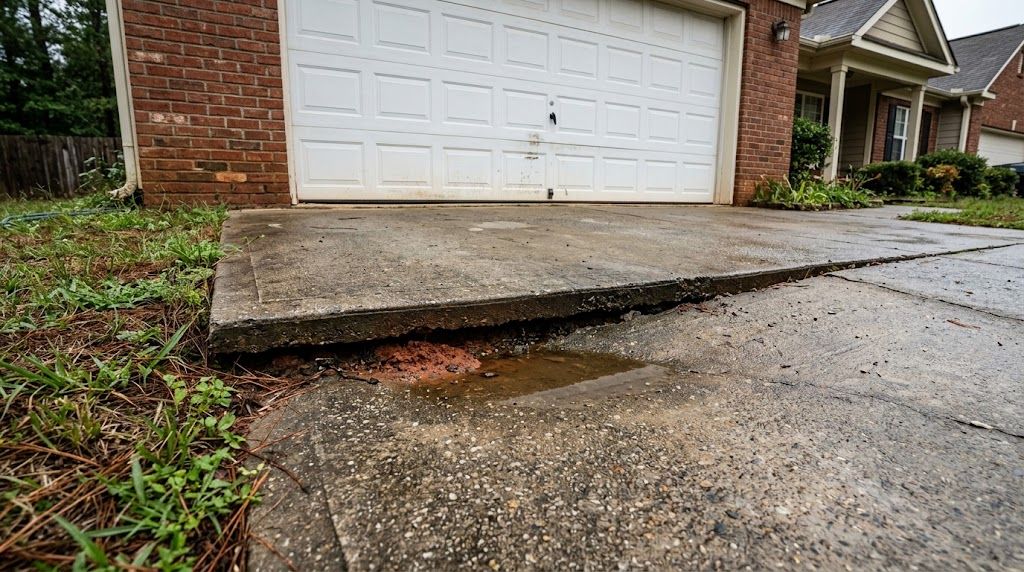
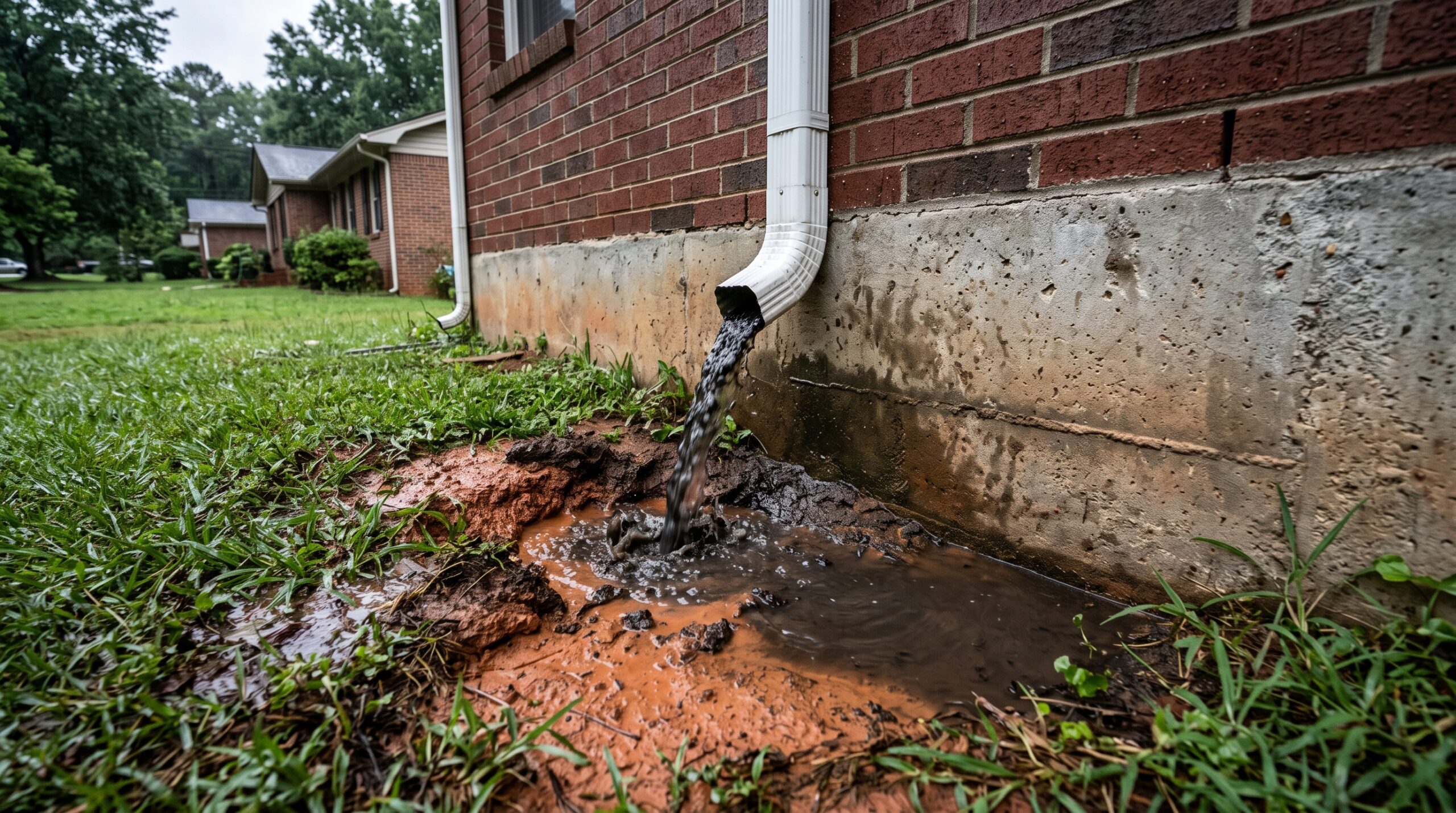
- Patches high on the wall or under a window: look outside first. Soil sloped toward the house, a clogged gutter or a downspout dumping at the foundation is the likely source.
- It comes back after you clean it: the water source is active, not historical.
Is It Dangerous?
Efflorescence, the white powder on basement walls, is not itself a health hazard, and surface efflorescence is generally cosmetic. The risk is what happens when the salts crystallize inside the masonry instead of on the surface. BIA warns that this subsurface crystallization “can develop tremendous pressures” and cause spalling, where the face of the brick or block flakes and breaks off.
This is why painting over efflorescence with a waterproofing paint is a bad shortcut. BIA notes that coatings can trap water just below the surface and promote exactly that internal crystallization. The wall looks clean for a season while the salts keep working behind the paint.
Mold is a different story. The EPA’s Brief Guide to Mold, Moisture and Your Home is direct: “The key to mold control is moisture control.” Scrub mold off hard surfaces with detergent and water and dry them completely, do not paint or caulk over moldy surfaces, and if growth covers more than about 10 square feet, follow the EPA’s guidance for larger cleanups.
How to Clean Efflorescence (and Why That Is Not the Fix)
BIA’s recommended order is simple:
- Dry brush first. A stiff nylon brush and a shop vacuum remove most deposits. Avoid wire brushes and sandblasting, which can damage the surface.
- Go easy on water. BIA advises against washing efflorescence off except in warm, dry weather, because added water can pull more salts to the surface.
- Test any cleaner on a small area first. Do not reach for muriatic (hydrochloric) acid. BIA lists improper acid cleaning as a cause of new efflorescence.
Then watch the wall. If the powder returns in a few weeks, cleaning was never the solution. It just reset the indicator.
Fix the Water, Not the Powder
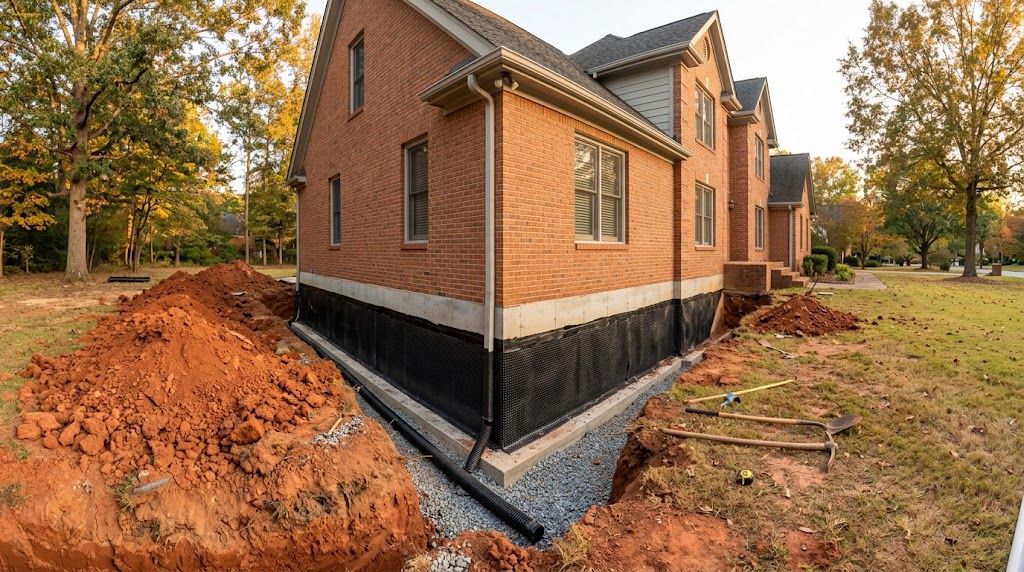
Because efflorescence needs water, stopping it means stopping the water that carries salts through the wall. Start with the inexpensive outside checks: grading that falls away from the house, gutters that are clean and sized for the roof, and downspouts that discharge well away from the foundation. We covered those in do gutters cause foundation problems? and French drain, regrading or dry well.
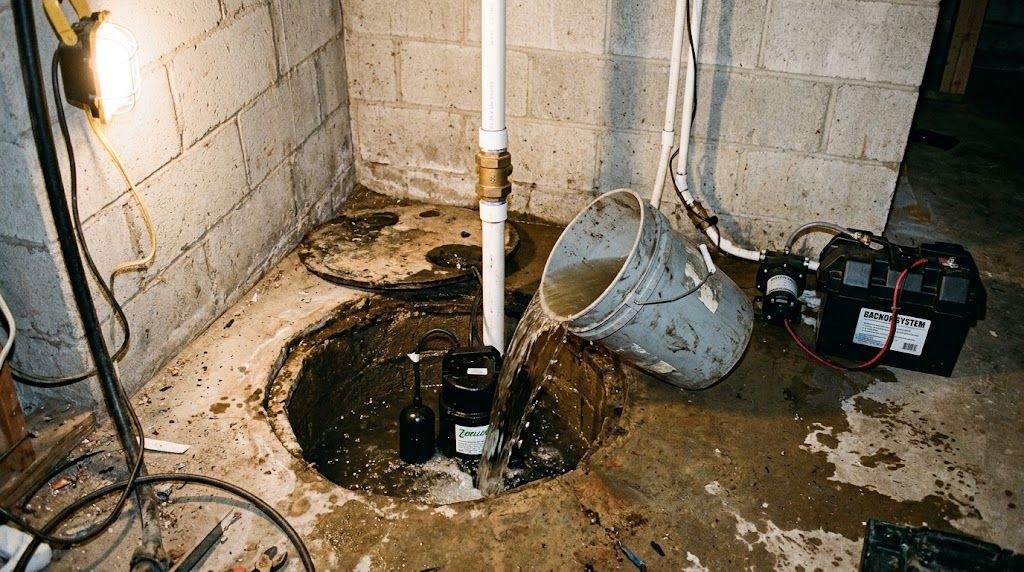
If the outside is in order and the powder keeps coming back, the wall needs real water management. Whether that means sealing the wall from the outside or draining it from the inside depends on where the water is entering, which we broke down in interior vs. exterior basement waterproofing.
Inside, keep the air drier too. The EPA recommends indoor relative humidity below 60 percent, ideally between 30 and 50 percent, which in a Georgia basement usually means a dehumidifier. If the wall is sweating rather than leaking, the cause may be condensation, a different problem we explained in why there is condensation on basement walls in the morning.
Have the Wall Checked Before Winter
CGS Waterproofing & Foundations diagnoses where basement water is coming from and fixes it with basement waterproofing, drainage and, when it is needed, mold remediation. We work across metro Atlanta, including Atlanta, Marietta, Alpharetta, Norcross and Athens. Full service area here.
Schedule a free inspection and we will tell you what the white powder on your basement walls means, where the water behind it is coming from, and what it takes to stop it.