On August 6, NOAA lowered its outlook for the Atlantic hurricane season again. The agency now expects 7 to 13 named storms, 2 to 6 hurricanes, and 0 to 2 major hurricanes, and it raised the odds of a below-normal season from 55 percent to 75 percent.
For most of the Southeast, that is good news. For your basement, it is not — and the reason is the same in both cases. A quiet hurricane season and an El Niño winter in Georgia are two symptoms of one pattern.
The Thing Suppressing the Hurricanes Is the Thing That Soaks Georgia
Hurricane seasons go quiet when El Niño is strong. Right now it is very strong. Water temperatures in the El Niño monitoring region are running about 2.07 degrees Celsius above average — higher than 2015, 1997, 1991, or 1982 measured at the same point in the year. NOAA’s Climate Prediction Center puts the odds of it becoming very strong between October and December at 81 percent, with a 97 percent chance it persists into early spring 2027. Some forecast models suggest it could end up the strongest El Niño since record keeping began in 1950.
El Niño shifts the subtropical jet stream south and parks it over the Gulf Coast and the Southeast. Storm systems that would normally track well north of Georgia instead ride that track straight across the state, one after another, from late fall through early spring.
The National Weather Service office in Peachtree City — the office that forecasts for metro Atlanta — has looked at this directly. Reviewing past El Niño winters in north and central Georgia, it found that the majority were wetter than normal, and it points to March 1998, an El Niño spring, as an example of significant flooding.
The Part Almost Nobody Is Connecting
A wet winter alone is manageable. What makes this particular setup worth paying attention to is what Georgia soil has been doing all year.
As of the first week of August, roughly 61.8 percent of Georgia was classified as abnormally dry, with about 19 percent in moderate drought or worse. And the year has been running dry for a while: January through June brought 22.12 inches of rain statewide, about 3.84 inches below normal, which ranks as the 35th driest such period since records began in 1895.
That matters because of what Georgia is built on.
Red Clay Does Not Forgive a Dry Summer Followed by a Wet Winter
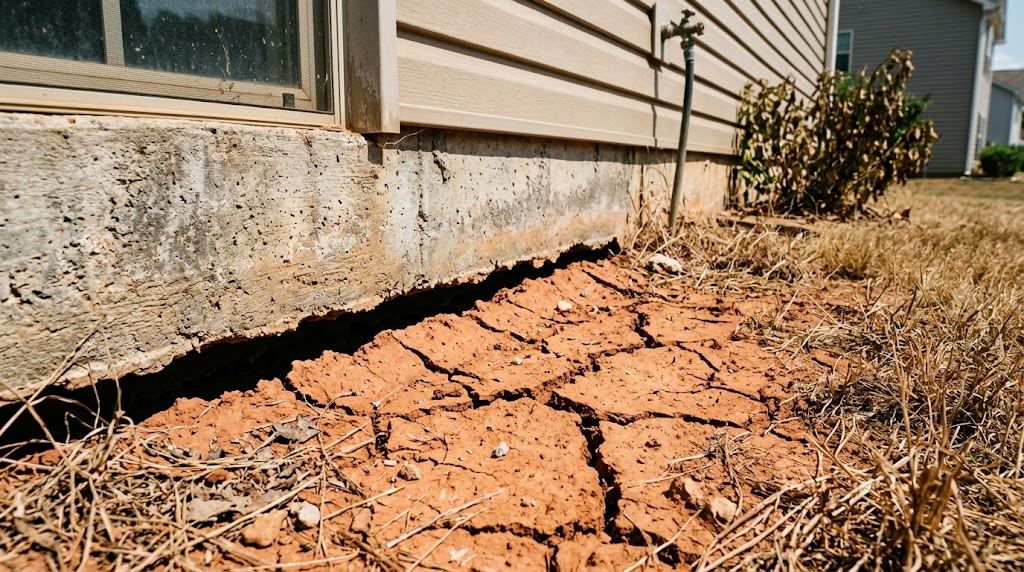
Metro Atlanta sits on red clay. Most of it is kaolinitic, which the USDA soil survey rates as low shrink-swell, so it is not the dramatically expansive soil of Texas or Colorado. But low is not zero: it still contracts as it dries and swells as it rewets, and after a dry year the surface cracking that produces is enough to change how water reaches your foundation.
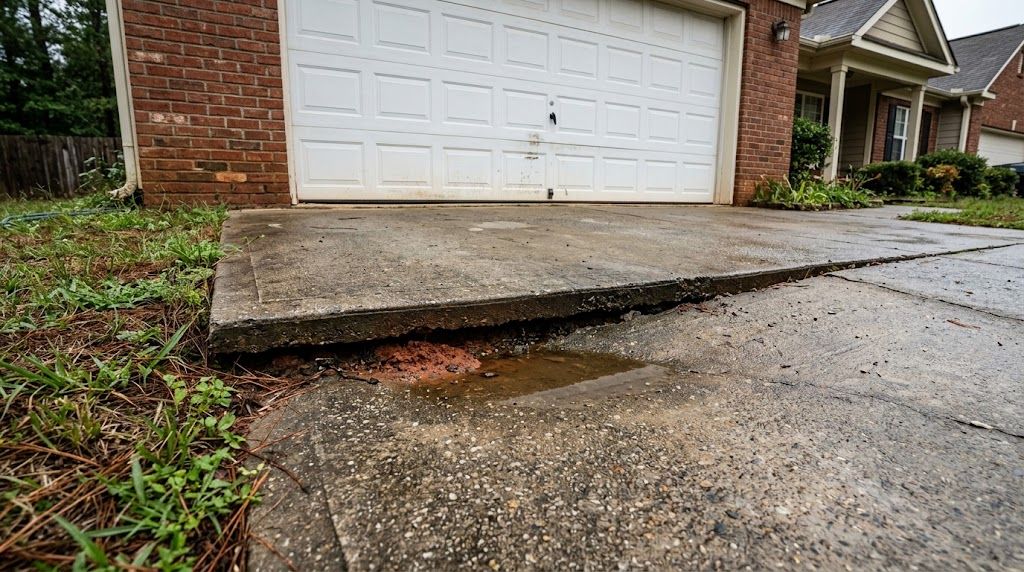
After a dry stretch, that clay contracts and pulls back from your foundation walls — the same phenomenon behind soil pulling away from your foundation in dry weather. What it leaves behind is a gap running down the outside of your foundation, sometimes several feet deep.
Under normal conditions that gap closes gradually as fall rains return. What a strong El Niño winter does differently is deliver a lot of water, repeatedly, over months. The gap becomes a channel. Water skips the slow soak through undisturbed soil and runs straight down to the footing, where it collects and pushes.
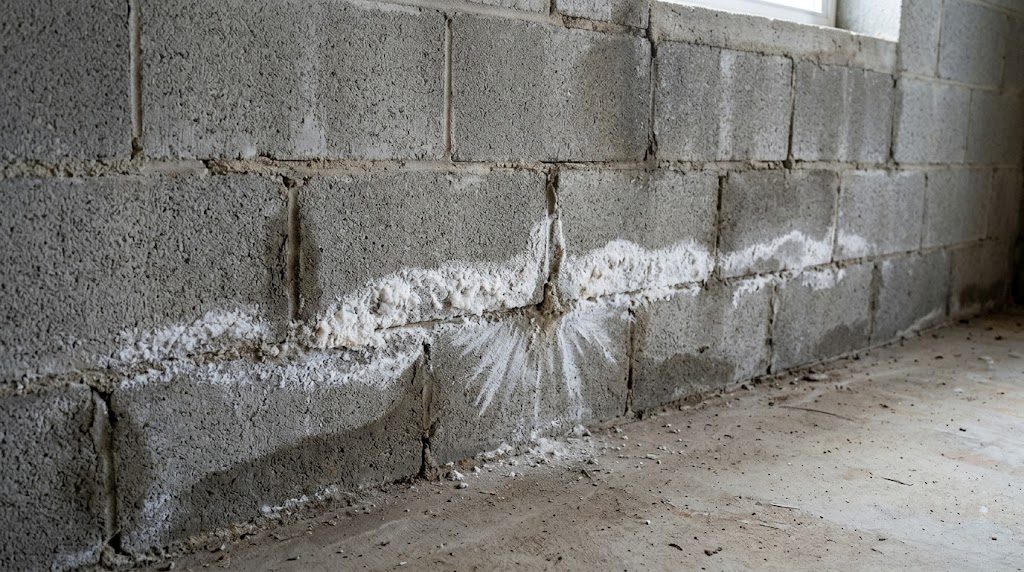
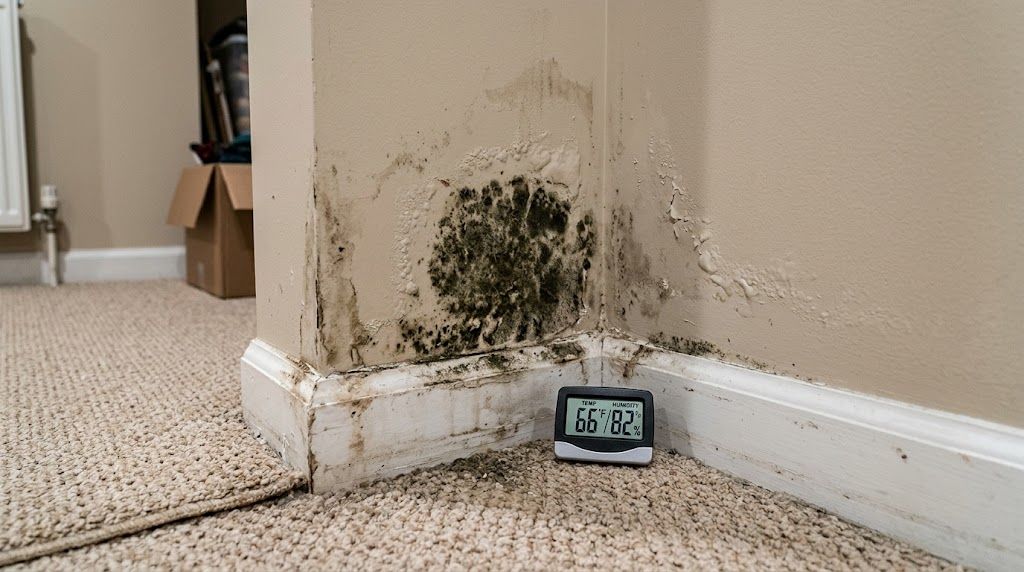
That push is hydrostatic pressure, and it is what turns a foundation that has been fine for fifteen years into one that seeps. It exploits the cove joint where the wall meets the slab, existing foundation cracks, and any penetration through the wall. The result shows up as water coming up through the floor after rain, damp walls, or a crawl space that never dries out.
Then the clay swells back — and swelling clay pushes against foundation walls from the outside. Dry-then-very-wet is the worst version of the cycle, and it is the version currently on the table.
An Honest Caveat, Because Forecasts Are Not Facts
Everything above is a probability, not a promise.
NOAA itself has cautioned that an El Niño this strong could produce atmospheric impacts never before observed, which means the historical pattern is a guide rather than a guarantee. Georgia could get a wet winter, a strangely dry one, or a wet winter that arrives as ice rather than rain. The Peachtree City office says as much: whether it shows up as flooding, an ice storm, or a severe weather outbreak is genuinely uncertain.
What is not uncertain is the current state of the ground. The soil around your foundation is dry right now, and it has been for most of the year. That part is measured, not forecast. The reasonable response is not panic about a specific winter — it is closing the gaps that would make any wet winter expensive.
What an El Niño Winter in Georgia Actually Does to a House
In a genuinely wet Georgia winter, the calls we get shift in a predictable way:
- Basements that have only ever been damp start holding standing water
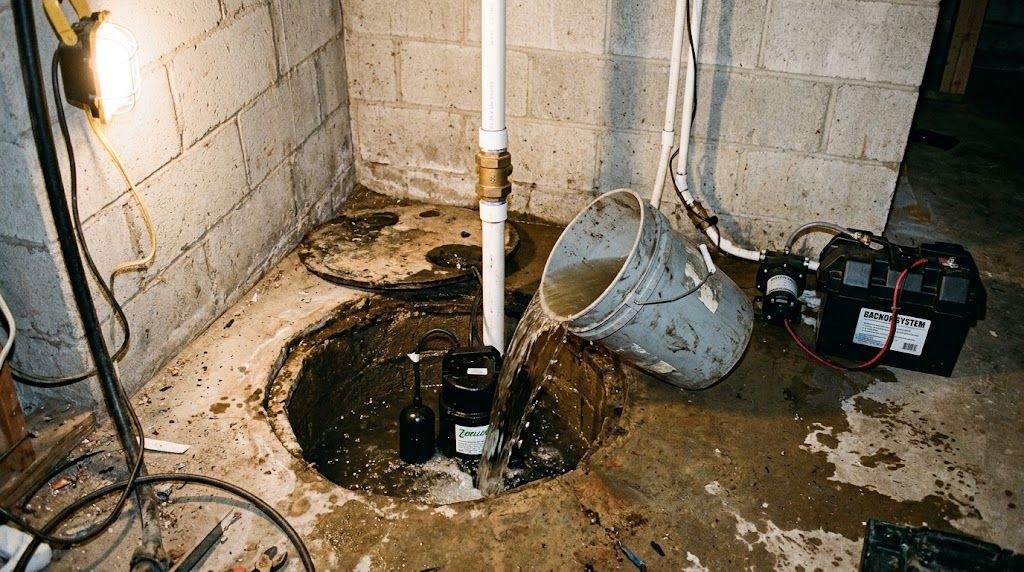
- Sump pumps that used to cycle occasionally run for hours, and the ones near end of life fail — usually at 2 a.m. during the heaviest rain
- Hairline cracks that were stable for years start weeping
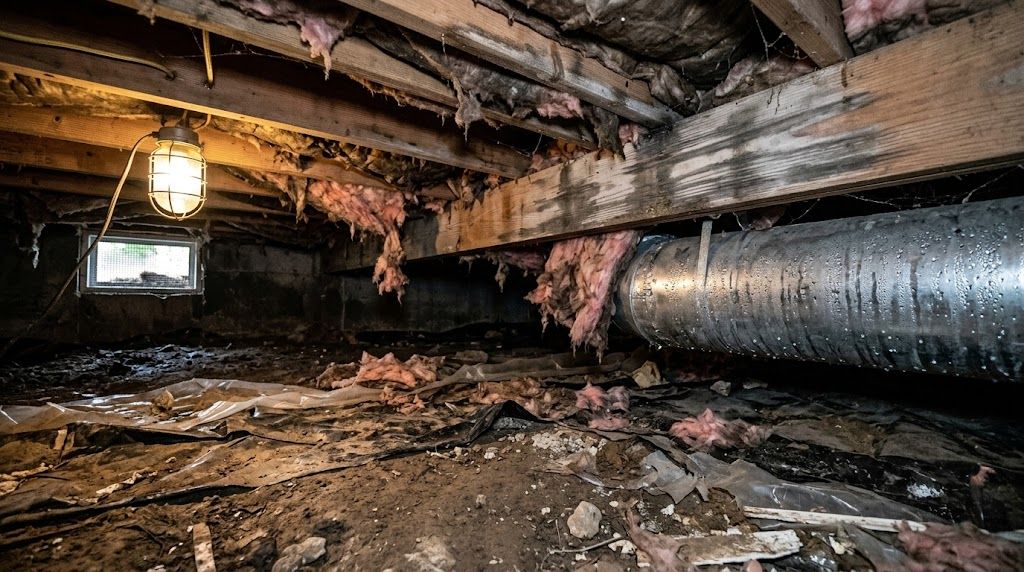
- Crawl space humidity stays high long enough for mold and wood rot to establish
- Downspouts that discharge two feet from the house stop being a minor annoyance and become the main water source
The Next 90 Days Are the Window
August through October is when this work is easiest, cheapest, and actually available. Here is the order that makes sense, from least to most expensive:
- Walk your downspouts during the next real rainstorm. Not after — during. Watch where the water lands. If it discharges within a few feet of the foundation, extend it. This is the cheapest meaningful thing you can do to a house, and it resolves a surprising share of basement water problems on its own.
- Clear and check the gutters. A clogged gutter turns your roof into a single concentrated waterfall aimed at one spot of foundation. If yours overflow every fall, gutters and guards are cheaper than what the overflow eventually costs.
- Look at your grading. Soil should fall away from the house, not toward it. Settled beds and old landscaping frequently slope the wrong way without anyone noticing.
- Test the sump pump before you need it. Pour water into the pit and confirm it kicks on and discharges. If it is more than seven or eight years old, replacing it in October costs less than replacing it in January, and far less than replacing a finished basement.
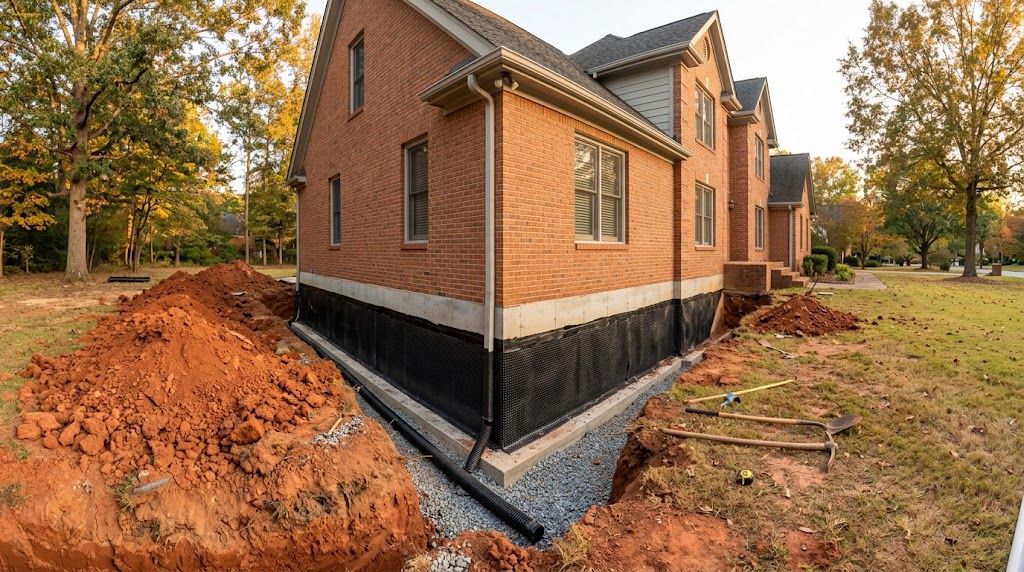
- Deal with groundwater properly if it is already getting in. If you have seen water this year, more rain will not be kinder. That is a drainage and waterproofing problem, and the fix is exterior or interior drainage plus sealing the assembly. Which drainage approach fits depends on your grade and soil — we compared them in French drain, regrading, or dry well.
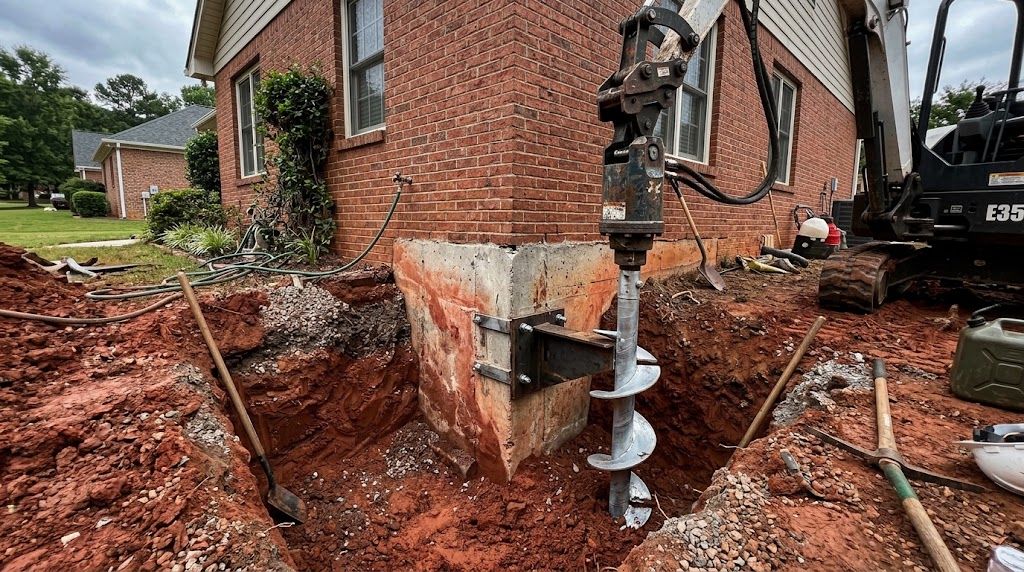
- Get widening cracks or bowing walls looked at now. Swelling clay loads foundation walls from outside. If a wall is already moving, a wet winter is the wrong time to find out how much. That is a foundation repair question, and it does not wait well.
- Do not forget the crawl space. Encapsulation and drainage in a crawl space matter more in a wet winter than a dry one, because the moisture never gets a chance to leave. Whether yours should be vented or closed is its own question: crawl space vents, open or closed in Georgia.
Why January Is the Expensive Month
There is a practical reason to move in the fall that has nothing to do with soil mechanics.
When a wet pattern sets in, every waterproofing and foundation contractor in metro Atlanta books out at once. Excavation is harder in saturated ground. Scheduling stretches from days to weeks. And homeowners calling with water already in the basement are not shopping carefully — they are taking whoever answers.
Work done in dry ground in October is straightforward. The same work done in February, with water actively coming in, is a different job at a different price.
And If You Are Assuming Insurance Has You Covered
It almost certainly does not. A standard homeowners policy covers water that arrives suddenly and accidentally, like a burst pipe. Water that seeps in from saturated ground is excluded, and that is exactly the kind this scenario produces. We wrote the full breakdown here: does homeowners insurance cover basement water damage in Georgia?
The short version: the most likely way a Georgia basement gets wet this winter is the one scenario nobody insures.
Get It Looked At While the Ground Is Still Dry
CGS Waterproofing & Foundations diagnoses basement and foundation water problems across metro Atlanta. We work in Atlanta, Marietta, Alpharetta, Norcross, and Athens, plus the rest of our service area.
If you have ever had water down there — even once, even years ago — this is the fall to find out why. Schedule an inspection and we will tell you where it is getting in and what it takes to stop it.
Forecast information in this article reflects NOAA and National Weather Service outlooks published in August 2026. Seasonal outlooks describe probabilities, not certainties, and conditions change. This article is general guidance for Georgia homeowners and is not a prediction of what will happen at any specific property.